Category: Uncategorized

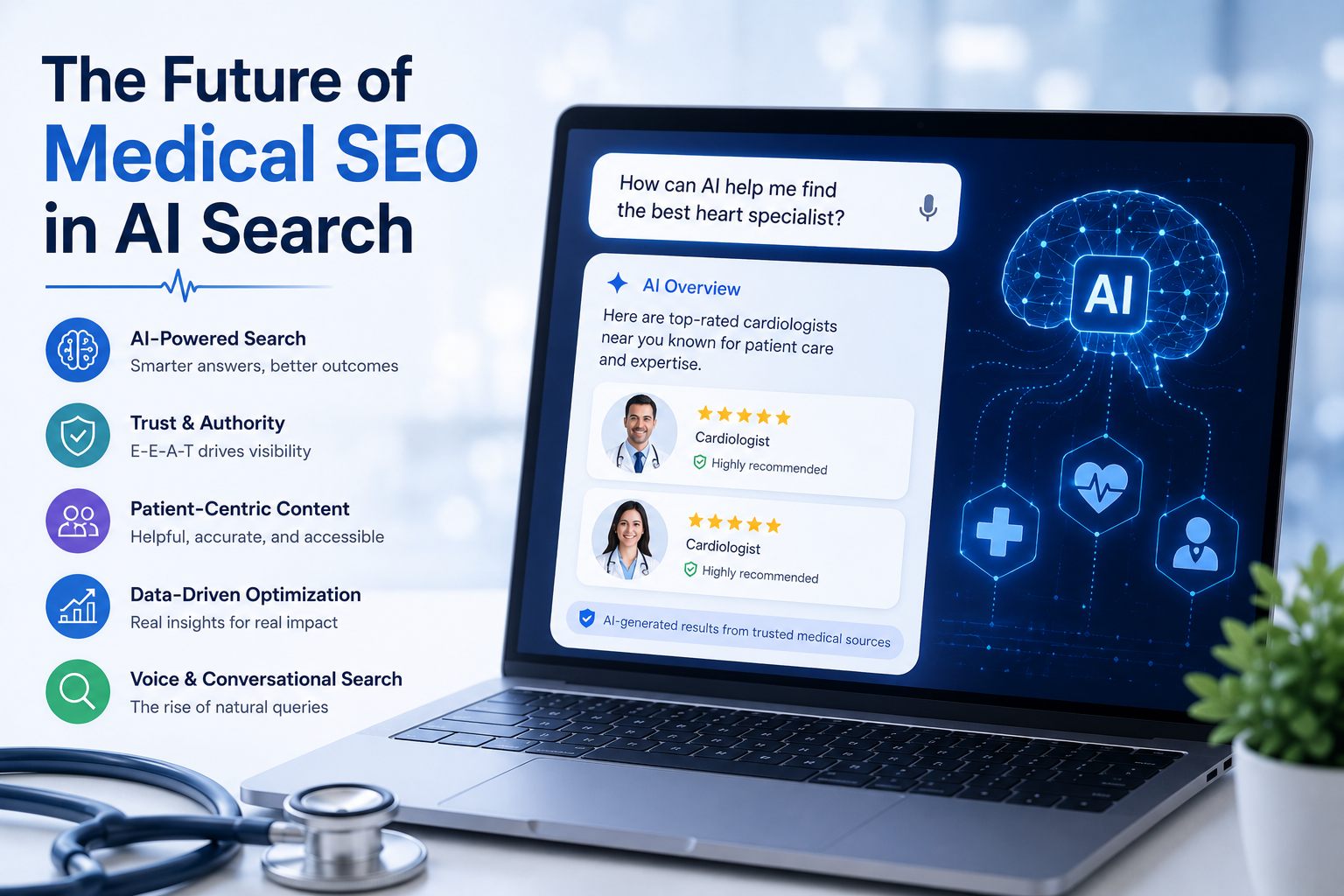
  • The Future of Medical SEO in AI Search

    The Future of Medical SEO in AI Search

    The healthcare industry is experiencing one of the most significant shifts in digital marketing history. Artificial intelligence is rapidly changing how people search for information, including how patients find doctors, research symptoms, compare healthcare providers, and make medical decisions.

    For years, traditional search engine optimization focused on keywords, backlinks, and ranking positions. While these factors still matter, AI-powered search is introducing a new era where search engines can understand context, intent, relationships between entities, and user behavior more effectively than ever before.

    As Google, AI assistants, and conversational search technologies continue to evolve, healthcare providers must adapt their SEO strategies to remain visible. Medical websites that fail to embrace these changes risk losing valuable traffic, patient inquiries, and online authority.

    The future of Medical SEO Services is no longer just about ranking on page one. It is about becoming the most trusted and authoritative source that AI-powered search engines choose to reference and recommend.

    What Is AI Search?

    Evolution From Traditional Search to AI Search

    Traditional search engines relied heavily on matching keywords to web pages. Users entered short search phrases, and search engines returned a list of websites based on relevance and authority.

    AI search works differently. Instead of simply displaying links, AI-powered systems generate direct answers by analyzing multiple sources and understanding user intent.

    For example, a patient searching “What causes chronic migraines?” may receive an AI-generated summary before viewing individual websites.

    How AI Search Engines Generate Answers

    AI search engines evaluate:

    • Content quality
    • Topical authority
    • Expertise signals
    • User intent
    • Structured data
    • Trustworthiness

    They then combine information from authoritative sources to generate answers.

    Why Healthcare Is Highly Impacted by AI Search

    Healthcare content falls under Google’s YMYL (Your Money or Your Life) category.

    Because medical information can affect health decisions, AI systems apply stricter standards when selecting content to display.

    Healthcare websites must demonstrate expertise, accuracy, and trustworthiness to remain competitive.

    How Patients Search for Healthcare Information Today

    Conversational Search Queries

    Patients increasingly use natural language when searching online.

    Examples include:

    • What are the symptoms of diabetes?
    • Why does my knee hurt when walking?
    • Which dermatologist is best for acne treatment?

    Healthcare websites must create content that answers these types of questions directly.

    Voice Search Growth

    Voice assistants have changed search behavior significantly.

    Patients now ask:

    • Find a pediatrician near me.
    • What doctor treats back pain?
    • Where is the nearest urgent care center?

    Optimizing for voice search is becoming an essential part of Medical SEO Services.

    AI-Powered Health Research

    Patients often use AI tools to understand symptoms, treatment options, and healthcare providers before scheduling appointments.

    This trend will continue to grow as AI search becomes more sophisticated.

    Local Healthcare Searches

    Even in an AI-driven environment, local intent remains strong.

    Patients frequently search for:

    • Family doctor near me
    • Orthopedic surgeon in Chicago
    • Dentist accepting new patients nearby

    Local SEO will remain critical for healthcare providers.

    Why AI Search Changes Medical SEO Forever

    Fewer Traditional Clicks

    AI-generated answers often provide immediate information within search results.

    This may reduce clicks to websites for simple informational searches.

    More Direct Answers

    Search engines increasingly focus on delivering concise answers.

    Healthcare websites should structure content clearly to increase the chances of being referenced.

    Increased Importance of Authority

    Authority is becoming one of the most important ranking factors.

    Search engines want confidence that medical information comes from credible sources.

    Higher Expectations for Content Quality

    Generic content is no longer enough.

    Healthcare websites must create detailed, accurate, and patient-focused resources.

    Google’s AI Overviews and Healthcare Websites

    What Are AI Overviews?

    AI Overviews are AI-generated summaries displayed directly within search results.

    These summaries answer questions without requiring users to visit multiple websites.

    How Medical Websites Can Appear in AI Overviews

    To improve visibility:

    • Publish comprehensive content
    • Answer questions clearly
    • Demonstrate expertise
    • Use structured data
    • Build topical authority

    Common Healthcare SEO Mistakes That Prevent Visibility

    Common issues include:

    • Thin content
    • Poor website structure
    • Lack of expertise signals
    • Weak internal linking
    • Outdated medical information

    The Growing Role of E-E-A-T in Medical SEO

    Experience

    Healthcare content should reflect real-world experience whenever possible.

    Expertise

    Medical information should be created or reviewed by qualified professionals.

    Authoritativeness

    Authority is built through:

    • Professional credentials
    • Industry recognition
    • Quality backlinks
    • Thought leadership

    Trustworthiness

    Trust signals include:

    • Accurate information
    • Secure websites
    • Clear contact details
    • Transparent authorship

    Why YMYL Content Faces Greater Scrutiny

    Because healthcare information affects people’s well-being, search engines evaluate medical content more rigorously than many other industries.

    Entity SEO and the Future of Healthcare Search

    What Is Entity-Based SEO?

    Entity SEO focuses on relationships between people, organizations, places, treatments, and medical conditions.

    Search engines increasingly understand these relationships.

    Building Relationships Between Doctors, Services, and Conditions

    Healthcare websites should clearly connect:

    • Providers
    • Services
    • Conditions
    • Treatments
    • Locations

    Structured Data and Healthcare Entities

    Schema markup helps search engines understand healthcare content.

    Important schema types include:

    • Physician
    • Medical Organization
    • FAQ
    • Local Business

    Knowledge Graph Optimization

    Strong entity signals help healthcare providers appear within Google’s Knowledge Graph and AI-generated responses.

    Topical Authority Will Matter More Than Keywords

    Why Keyword Stuffing No Longer Works

    Search engines now understand context and user intent.

    Repeating keywords excessively provides little value.

    Creating Comprehensive Topic Clusters

    Healthcare organizations should build content around specialties.

    Example:

    Cardiology Hub

    • Heart Disease Symptoms
    • Cardiac Testing
    • Heart Health Tips
    • Cardiology Treatments
    • Prevention Strategies

    Building Specialty-Specific Content Hubs

    Content hubs demonstrate expertise and strengthen topical authority.

    Demonstrating Expertise Across Entire Medical Topics

    Comprehensive coverage increases trust and visibility in AI search.

    AI Search Optimization Strategies for Healthcare Websites

    Create Question-Based Content

    Answer common patient questions clearly.

    Optimize for Featured Snippets

    Use:

    • Lists
    • Definitions
    • Step-by-step explanations
    • FAQ sections

    Improve Content Structure

    Organize content using:

    • H2 headings
    • H3 subheadings
    • Bullet points
    • Tables

    Strengthen Internal Linking

    Connect related content to establish topic relevance.

    Use Schema Markup

    Schema improves content understanding and visibility.

    Voice Search and Conversational Healthcare SEO

    How Patients Use Voice Search

    Voice searches are often longer and more conversational.

    Long-Tail Question Optimization

    Focus on complete questions instead of short keywords.

    Local Voice Search Opportunities

    Examples:

    • Best urgent care near me
    • Pediatrician open today nearby

    These searches often have high conversion potential.

    Technical SEO in the AI Era

    Website Speed

    Fast websites improve user experience and search performance.

    Mobile Experience

    Mobile optimization remains essential.

    Crawlability

    Search engines must access and understand content efficiently.

    Structured Data

    Schema markup helps AI systems interpret healthcare information accurately.

    Page Experience Signals

    Positive user experiences support long-term SEO success.

    Local SEO Remains Critical

    Google Business Profile Optimization

    Maintain complete and accurate profiles.

    Reviews and Reputation Management

    Patient reviews continue to influence visibility and trust.

    Local Content Strategies

    Create location-specific content and service pages.

    Location Authority Signals

    Build authority within your service areas.

    The Biggest Medical SEO Trends for the Next Five Years

    AI-Powered Search Results

    AI-generated answers will become increasingly common.

    Personalized Search Experiences

    Search results will become more tailored to individual users.

    Predictive Patient Search Behavior

    AI may anticipate healthcare needs before patients complete searches.

    Increased Importance of Trust Signals

    Trust and authority will become even more important ranking factors.

    Greater Integration of Healthcare Entities

    Search engines will continue improving their understanding of medical relationships and healthcare knowledge.

    Future-Proofing Your Healthcare Website

    Invest in Content Quality

    High-quality content remains the foundation of Medical SEO Services.

    Build Medical Authority

    Demonstrate expertise across all content.

    Focus on Patient Experience

    Provide useful, accessible information.

    Continuously Update Content

    Healthcare information must remain current and accurate.

    Work With Specialized Medical SEO Services

    Healthcare SEO requires expertise in both search optimization and medical marketing.

    The Future Medical SEO Checklist

    AI Search Readiness

    ✔ Create question-based content

    ✔ Optimize for AI Overviews

    ✔ Improve content structure

    E-E-A-T Optimization

    ✔ Display credentials

    ✔ Add author information

    ✔ Build trust signals

    Technical SEO

    ✔ Improve page speed

    ✔ Ensure mobile usability

    ✔ Fix crawl errors

    Local SEO

    ✔ Optimize Google Business Profile

    ✔ Build reviews

    ✔ Create location pages

    Content Authority

    ✔ Build topic clusters

    ✔ Publish expert content

    ✔ Update outdated pages

    Schema Markup

    ✔ Medical Organization Schema

    ✔ Physician Schema

    ✔ FAQ Schema

    Conversion Optimization

    ✔ Online booking

    ✔ Strong calls-to-action

    ✔ Clear contact information

    Conclusion

    The future of Medical SEO is being shaped by artificial intelligence, conversational search, entity understanding, and increasing demands for expertise and trustworthiness. Healthcare organizations that continue relying on outdated SEO strategies may struggle to maintain visibility as AI-powered search evolves.

    Success in the AI era requires more than keywords. Healthcare websites must demonstrate authority, answer patient questions comprehensively, optimize for AI-driven search experiences, and build trust through high-quality content.

    Medical SEO Services are becoming increasingly important as healthcare providers navigate these changes. Organizations that invest in future-focused SEO strategies today will be better positioned to attract patients, build authority, and remain competitive tomorrow.

    At The Medical SEO, we help healthcare organizations adapt to AI-powered search and develop sustainable SEO strategies designed for long-term growth and patient acquisition.

    Frequently Asked Questions

    What is AI search in healthcare SEO?

    AI search uses artificial intelligence to generate answers and understand user intent beyond traditional keyword matching.

    How do AI Overviews affect medical websites?

    They provide direct answers in search results and increase the importance of authoritative content.

    Will AI replace traditional SEO?

    No. SEO remains essential, but strategies must evolve to align with AI-powered search.

    What is entity SEO in healthcare?

    Entity SEO focuses on relationships between healthcare providers, treatments, conditions, and organizations.

    Why is E-E-A-T important for medical websites?

    It helps search engines evaluate the credibility and trustworthiness of healthcare content.

    How can healthcare websites rank in AI search results?

    By creating authoritative content, demonstrating expertise, using structured data, and building topical authority.

    What role does schema markup play in AI SEO?

    Schema helps search engines understand content and entities more accurately.

    Is local SEO still important in AI search?

    Yes. Local searches remain critical for patient acquisition.

    How should doctors prepare for AI-powered search engines?

    Focus on expertise, content quality, authority building, and patient-focused information.

    What are the biggest healthcare SEO trends for the future?

    AI Overviews, entity SEO, topical authority, voice search, and trust-based ranking signals.

  • Medical SEO Checklist for Healthcare Websites

    Medical SEO Checklist for Healthcare Websites

    In today’s digital-first healthcare landscape, patients rarely choose a doctor without conducting online research. Whether they are searching for a primary care physician, specialist, dental clinic, or hospital, search engines are often their first destination. This shift in patient behavior has made search engine optimization (SEO) a critical component of healthcare marketing.

    A well-optimized healthcare website helps practices improve visibility, attract qualified patients, and build trust online. However, healthcare SEO requires more than simply adding keywords to a website. Providers must focus on technical performance, local visibility, content quality, user experience, and authority signals.

    This Medical SEO Checklist for Healthcare Websites covers the essential elements healthcare organizations need to improve rankings, increase patient acquisition, and stay competitive in search results.

    Why Healthcare Websites Need Medical SEO

    Growing Competition in Healthcare Search

    The healthcare industry is more competitive than ever. Patients have countless options available, and search engines often determine which providers receive attention first. Without SEO, even highly qualified medical professionals may struggle to gain visibility online.

    Patient Search Behavior Has Changed

    Today’s patients use Google to:

    • Find doctors near them
    • Research symptoms
    • Compare providers
    • Read reviews
    • Verify credentials
    • Schedule appointments

    Healthcare providers must align their websites with these search behaviors.

    The Impact of Organic Search on Patient Acquisition

    Organic search traffic delivers highly qualified visitors who are actively seeking healthcare services. Unlike paid advertising, SEO generates sustainable visibility that can drive patient acquisition over the long term.

    Website Foundation Checklist

    A strong SEO strategy starts with a solid website foundation.

    Secure HTTPS Website

    Healthcare websites should use HTTPS to protect patient data and improve trust.

    Checklist:

    SSL certificate installed

    HTTPS enabled across all pages

    No security warnings

    Mobile-Friendly Design

    Most healthcare searches now occur on mobile devices.

    Checklist:

    Responsive design

    Easy navigation

    Mobile-friendly forms

    Readable content on all screen sizes

    Fast Loading Speed

    Website speed directly affects user experience and search rankings.

    Checklist:

    Optimized images

    Fast hosting

    Minimal code bloat

    Browser caching enabled

    Clear Site Structure

    Healthcare websites should have an organized structure that makes navigation easy.

    Example:

    • Home
    • About
    • Services
    • Doctors
    • Locations
    • Blog
    • Contact

    SEO-Friendly URLs

    Use clean and descriptive URLs.

    Good Example:

    yourwebsite.com/cardiology-services

    Bad Example:

    yourwebsite.com/page?id=101

    Technical SEO Checklist

    Technical SEO ensures search engines can properly crawl and index your website.

    XML Sitemap Setup

    An XML sitemap helps search engines discover important pages.

    Checklist:

    Sitemap generated

    Submitted to Google Search Console

    Updated automatically

    Robots.txt Optimization

    Your robots.txt file should guide search engines correctly.

    Checklist:

    Important pages accessible

    Unnecessary pages blocked

    No indexing issues

    Fix Crawl Errors

    Regularly monitor crawl issues.

    Checklist:

    No broken pages

    No redirect loops

    No indexing problems

    Core Web Vitals Optimization

    Google values positive page experiences.

    Focus on:

    • Loading speed
    • Interactivity
    • Visual stability

    Structured Data Implementation

    Schema markup helps search engines understand healthcare content.

    Recommended schema:

    • Medical Organization
    • Physician
    • FAQ
    • Review
    • Local Business

    On-Page SEO Checklist

    Optimized Title Tags

    Every page should have a unique title.

    Example:

    Orthopedic Services in Dallas | ABC Medical Center

    Compelling Meta Descriptions

    Meta descriptions encourage clicks from search results.

    Checklist:

    ✔ Include target keyword

    ✔ Under 160 characters

    ✔ Encourage user action

    Proper Heading Structure

    Use:

    • H1 for page title
    • H2 for major sections
    • H3 for subsections

    Internal Linking Strategy

    Connect related pages to improve navigation and SEO.

    Examples:

    • Blog posts linking to service pages
    • Service pages linking to doctor profiles

    Image Optimization

    Checklist:

    ✔ Alt text added

    ✔ Descriptive filenames

    ✔ Compressed images

    ✔ Mobile-friendly formats

    Content SEO Checklist

    Create High-Quality Service Pages

    Every service should have a dedicated page.

    Include:

    • Conditions treated
    • Procedures offered
    • Benefits
    • FAQs
    • Appointment information

    Publish Patient-Focused Blog Content

    Educational content helps attract organic traffic.

    Examples:

    • Common Causes of Back Pain
    • When to Visit a Cardiologist
    • Signs of High Blood Pressure

    Optimize for Search Intent

    Understand what patients want when searching.

    Intent types include:

    • Informational
    • Local
    • Transactional

    Build Topical Authority

    Develop content clusters around specialties.

    Example Cardiology Cluster:

    • Heart Disease Symptoms
    • Cardiac Testing
    • Heart Health Tips
    • Cardiology Services

    Include Medical Expertise Signals

    Demonstrate credibility through:

    • Doctor authorship
    • Medical reviewers
    • Updated publication dates
    • Professional credentials

    Local SEO Checklist

    Local SEO is one of the most important ranking factors for healthcare providers.

    Google Business Profile Optimization

    Checklist:

    ✔ Accurate contact details

    ✔ Updated office hours

    ✔ Photos uploaded

    ✔ Services listed

    ✔ Reviews monitored

    Consistent NAP Information

    NAP stands for:

    • Name
    • Address
    • Phone Number

    Keep this information consistent across all platforms.

    Local Landing Pages

    Create unique pages for each service area.

    Examples:

    • Dentist in Austin
    • Pediatrician in Houston
    • Orthopedic Clinic in Miami

    Healthcare Directory Listings

    Ensure information is accurate across healthcare directories.

    Location-Based Keywords

    Examples:

    • Dermatologist in Chicago
    • Family Doctor in Dallas
    • Urgent Care in Atlanta

    Doctor Profile Optimization Checklist

    Doctor profile pages often influence patient decisions.

    Credentials and Certifications

    Display:

    • Education
    • Board certifications
    • Licenses
    • Professional memberships

    Professional Biography

    Include:

    • Experience
    • Specialties
    • Clinical interests
    • Treatment philosophy

    Areas of Expertise

    Clearly explain the conditions and treatments each provider specializes in.

    Patient Testimonials

    Positive patient experiences build trust and improve conversions.

    Online Reputation Management Checklist

    Encourage Patient Reviews

    Reviews influence both rankings and patient decisions.

    Respond to Reviews Professionally

    Show patients that feedback is valued.

    Monitor Online Mentions

    Track reviews and mentions across platforms.

    Build Trust Signals

    Display:

    • Awards
    • Certifications
    • Memberships
    • Media appearances

    AI Search Optimization Checklist

    Optimize for AI Overviews

    Create clear, authoritative answers to patient questions.

    Answer Common Patient Questions

    Examples:

    • What causes migraines?
    • When should I see a dermatologist?
    • What are the symptoms of diabetes?

    Use Entity-Based SEO

    Help search engines understand relationships between:

    • Doctors
    • Treatments
    • Conditions
    • Locations

    Strengthen Topical Authority

    Cover healthcare topics comprehensively rather than publishing isolated articles.

    Conversion Optimization Checklist

    Easy Appointment Booking

    Patients should schedule appointments quickly and easily.

    Clear Contact Information

    Display contact details prominently.

    Strong Calls-to-Action

    Examples:

    • Book an Appointment
    • Request a Consultation
    • Contact Our Team

    Mobile Conversion Optimization

    Ensure all forms and booking tools work flawlessly on mobile devices.

    Common Medical SEO Mistakes to Avoid

    Thin Content

    Low-quality content rarely ranks well.

    Duplicate Pages

    Avoid copying content across service or location pages.

    Slow Website Speed

    Poor performance harms rankings and user experience.

    Ignoring Local SEO

    Many healthcare websites miss valuable local search opportunities.

    Outdated Medical Content

    Regular updates improve relevance and trustworthiness.

    Complete Medical SEO Checklist Summary

    Website Foundation

    ✔ HTTPS enabled

    ✔ Mobile-friendly design

    ✔ Fast loading speed

    ✔ Clear site structure

    ✔ SEO-friendly URLs

    Technical SEO

    ✔ XML sitemap

    ✔ Robots.txt optimization

    ✔ Crawl error fixes

    ✔ Core Web Vitals

    ✔ Structured data

    On-Page SEO

    ✔ Optimized titles

    ✔ Meta descriptions

    ✔ Heading structure

    ✔ Internal linking

    ✔ Image optimization

    Content SEO

    ✔ Service pages

    ✔ Blog content

    ✔ Search intent optimization

    ✔ Topic clusters

    ✔ Expertise signals

    Local SEO

    ✔ Google Business Profile

    ✔ NAP consistency

    ✔ Location pages

    ✔ Directory listings

    ✔ Local keywords

    Reputation Management

    ✔ Patient reviews

    ✔ Review monitoring

    ✔ Trust signals

    AI Search Optimization

    ✔ AI-friendly content

    ✔ Question-based content

    ✔ Entity SEO

    ✔ Topical authority

    Conversion Optimization

    ✔ Appointment booking

    ✔ Contact information

    ✔ Calls-to-action

    ✔ Mobile usability

    Conclusion

    A successful healthcare website requires more than attractive design. To attract patients consistently, healthcare organizations must invest in a comprehensive SEO strategy that addresses technical performance, content quality, local visibility, online reputation, and patient experience.

    By following this Medical SEO Checklist for Healthcare Websites, healthcare providers can identify opportunities to improve rankings, increase website traffic, and generate more patient appointments. As search engines continue to evolve and AI-driven search becomes more common, maintaining a proactive SEO strategy will remain essential for long-term growth.

    At The Medical SEO, our specialized Medical SEO Services help healthcare practices improve online visibility, attract qualified patients, and achieve sustainable growth in an increasingly competitive digital landscape.

    Frequently Asked Questions

    What is a Medical SEO checklist?

    A Medical SEO checklist is a structured framework that helps healthcare websites improve rankings, visibility, and patient acquisition through SEO best practices.

    Why is SEO important for healthcare websites?

    SEO helps healthcare providers appear in search results when patients are actively looking for medical services.

    How often should healthcare websites perform SEO audits?

    Most healthcare websites should perform comprehensive SEO audits every three to six months.

    What are the most important healthcare SEO ranking factors?

    Content quality, local SEO, website speed, mobile usability, reviews, and technical optimization are key ranking factors.

    How does local SEO help medical practices?

    Local SEO improves visibility in map results and local searches, helping nearby patients find your practice.

    How long does Medical SEO take to show results?

    Most practices begin seeing measurable improvements within three to six months.

    What role do patient reviews play in SEO?

    Reviews improve trust, influence patient decisions, and contribute to local search rankings.

    How does AI search impact healthcare SEO?

    AI search rewards authoritative, well-structured content that directly answers patient questions and demonstrates expertise.

  • How Doctors Can Rank in AI Search Results

    How Doctors Can Rank in AI Search Results

    Artificial intelligence is transforming how patients find healthcare information online. Instead of simply displaying a list of websites, modern search engines now generate direct answers through AI-powered search experiences such as Google AI Overviews and conversational search tools.

    For doctors and healthcare providers, this shift creates both challenges and opportunities. Traditional SEO focused heavily on ranking webpages for specific keywords. Today, AI search evaluates expertise, authority, trustworthiness, topical relevance, and content quality to determine which sources deserve visibility.

    Patients are increasingly asking detailed questions such as:

    • What causes persistent headaches?
    • Who is the best dermatologist for acne treatment?
    • When should I see a cardiologist?
    • How is sleep apnea diagnosed?

    AI search engines analyze multiple sources to generate answers, meaning doctors must optimize their websites differently than they did in the past.

    The good news is that physicians who establish strong expertise signals, create comprehensive content, and invest in Medical SEO Services can significantly improve their visibility in AI-powered search results.

    In this guide, we’ll explain how doctors can rank in AI search results and future-proof their online presence.

    What Are AI Search Results?

    Traditional Search vs AI Search

    Traditional search engines display a list of webpages based on keyword relevance and authority.

    Medical SEO Services

    AI search goes a step further by:

    • Understanding context
    • Interpreting user intent
    • Analyzing multiple sources
    • Generating direct answers

    Instead of forcing users to click several websites, AI often provides immediate information within search results.

    How AI Search Engines Generate Answers

    AI systems evaluate:

    • Content quality
    • Medical expertise
    • Website authority
    • User intent
    • Structured data
    • Trust signals

    The most credible and relevant sources are often referenced within AI-generated responses.

    Why Healthcare Content Is Evaluated Differently

    Healthcare content falls under Google’s Your Money or Your Life (YMYL) category.

    Because medical information can impact health outcomes, AI systems apply stricter quality standards when evaluating healthcare websites.

    Why Doctors Need to Adapt to AI Search

    AI Is Changing Patient Discovery

    Patients increasingly use AI-powered search tools to:

    • Research symptoms
    • Compare treatments
    • Find specialists
    • Evaluate healthcare providers

    If your website is not optimized for AI search, potential patients may never discover your practice.

    The Decline of Traditional Click Patterns

    Many users now receive answers directly in search results.

    This means doctors must focus on becoming a trusted source that AI systems choose to reference.

    Growing Importance of Trust and Authority

    AI prioritizes content from sources that demonstrate:

    • Professional expertise
    • Real-world experience
    • Medical authority
    • Trustworthiness

    Increased Competition for Visibility

    More healthcare organizations are investing in content marketing and Medical SEO Services, making competition stronger than ever.

    How AI Search Chooses Medical Sources

    E-E-A-T Signals

    Google emphasizes:

    Experience

    Real-world knowledge and patient care experience.

    Expertise

    Professional medical qualifications and knowledge.

    Authoritativeness

    Recognition within the healthcare industry.

    Trustworthiness

    Accuracy, transparency, and credibility.

    Strong E-E-A-T signals significantly improve AI search visibility.

    Medical Expertise Verification

    Healthcare websites should clearly display:

    • Physician credentials
    • Board certifications
    • Medical education
    • Clinical experience

    Authority and Reputation Signals

    AI systems consider:

    • Professional recognition
    • Industry mentions
    • Quality backlinks
    • Positive patient reviews

    Content Quality Evaluation

    AI search rewards content that is:

    • Accurate
    • Comprehensive
    • Well-organized
    • Helpful to patients

    Build Strong Doctor Authority Signals

    Optimize Doctor Profile Pages

    Every physician should have a detailed profile page.

    Include:

    • Professional biography
    • Areas of specialization
    • Certifications
    • Clinical experience
    • Publications

    Display Credentials and Certifications

    Clearly showcase:

    • Medical degrees
    • Board certifications
    • Fellowships
    • Professional memberships

    These elements reinforce expertise.

    Highlight Medical Experience

    Explain:

    • Years in practice
    • Special procedures performed
    • Areas of focus

    Experience helps build trust with both patients and search engines.

    Showcase Awards and Professional Memberships

    Examples include:

    • Medical associations
    • Healthcare awards
    • Research contributions
    • Speaking engagements

    These signals strengthen authority.

    Create AI-Friendly Healthcare Content

    Answer Patient Questions Directly

    Patients search for answers.

    Examples:

    • What causes chronic back pain?
    • When should I visit a neurologist?
    • What are the symptoms of thyroid disease?

    Provide clear, direct responses.

    Create Comprehensive Topic Coverage

    Cover topics thoroughly by discussing:

    • Symptoms
    • Causes
    • Diagnosis
    • Treatment options
    • Prevention strategies

    Use Simple and Clear Language

    Avoid excessive medical jargon.

    Patients and AI systems both benefit from clear communication.

    Publish Condition and Treatment Guides

    Long-form educational content performs well because it demonstrates expertise and authority.

    Examples:

    • Complete Guide to Diabetes Management
    • Understanding Knee Replacement Surgery
    • Treatment Options for Chronic Migraines

    Build Topical Authority in Your Specialty

    What Is Topical Authority?

    Topical authority refers to how comprehensively a website covers a subject.

    Search engines prefer specialists who consistently publish valuable content in their field.

    Creating Specialty Content Clusters

    For example, a cardiology website could publish:

    Heart Disease Symptoms

    Cardiac Testing

    Heart Failure Treatment

    Cholesterol Management

    Heart Health Prevention

    Together, these articles create a content ecosystem.

    Connecting Services, Conditions, and Treatments

    Show clear relationships between:

    • Medical conditions
    • Treatment options
    • Providers
    • Services

    This strengthens relevance.

    Becoming the Trusted Source in Your Niche

    The goal is to become the most comprehensive resource in your specialty.

    Optimize for AI Overviews

    Understanding AI Overviews

    AI Overviews provide summarized answers at the top of search results.

    Healthcare websites frequently appear in these summaries when they offer authoritative information.

    Content Formats That Perform Well

    Effective formats include:

    • Lists
    • Definitions
    • Step-by-step guides
    • FAQs
    • Treatment comparisons

    Featured Snippet Optimization

    Structure content to answer questions immediately.

    Example:

    Question: What are the symptoms of sleep apnea?

    Answer: Common symptoms include loud snoring, daytime fatigue, morning headaches, and interrupted breathing during sleep.

    FAQ Optimization

    Dedicated FAQ sections increase visibility and align with AI-generated answers.

    Entity SEO for Doctors

    What Is Entity SEO?

    Entity SEO focuses on relationships between:

    • Doctors
    • Medical conditions
    • Treatments
    • Hospitals
    • Locations

    AI search increasingly relies on these relationships.

    Connecting Doctors to Medical Topics

    Clearly associate physicians with:

    • Specialties
    • Procedures
    • Conditions treated

    Healthcare Knowledge Graph Signals

    Strong entity relationships improve visibility within Google’s Knowledge Graph and AI systems.

    Structured Data for Medical Practices

    Implement schema markup for:

    • Physicians
    • Medical organizations
    • Reviews
    • FAQs
    • Locations

    Schema helps AI understand healthcare content.

    Technical SEO for AI Search

    Website Speed

    Fast websites improve:

    • User experience
    • Search visibility
    • Patient engagement

    Mobile Optimization

    Most healthcare searches occur on smartphones.

    Ensure:

    • Responsive design
    • Easy navigation
    • Mobile-friendly forms

    Crawlability

    Search engines must access and understand your content.

    Regularly monitor:

    • Broken links
    • Crawl errors
    • Indexing issues

    Schema Markup

    Schema provides structured information that supports AI understanding.

    User Experience Signals

    Positive user experiences improve search performance.

    Focus on:

    • Clear navigation
    • Readability
    • Accessibility

    Local SEO Still Matters in AI Search

    Google Business Profile Optimization

    Your profile should include:

    Local Authority Signals

    Strengthen local relevance through:

    • Citations
    • Community involvement
    • Local content

    Patient Reviews

    Reviews influence both rankings and patient trust.

    Encourage satisfied patients to leave feedback.

    Location-Specific Content

    Create pages targeting areas you serve.

    Examples:

    • Pediatrician in Houston
    • Orthopedic Surgeon in Dallas

    Voice Search and Conversational Search Optimization

    How Patients Use Voice Search

    Voice searches are typically conversational.

    Examples:

    • What doctor treats migraines?
    • Where can I find a dermatologist near me?

    Long-Tail Healthcare Questions

    Optimize content around complete questions rather than short keywords.

    Natural Language Optimization

    Write content that mirrors how patients speak and search.

    Common Reasons Doctors Fail to Rank in AI Search

    Thin Content

    Short, low-value pages struggle to compete.

    Weak Authority Signals

    Lack of credentials and expertise indicators can hurt visibility.

    Outdated Information

    Healthcare content must remain current.

    Poor Technical SEO

    Technical issues can prevent proper indexing and crawling.

    Lack of Topic Coverage

    Publishing only a few articles is rarely enough to establish authority.

    AI Search Ranking Checklist for Doctors

    E-E-A-T Optimization

    ✔ Display physician credentials

    ✔ Add author biographies

    ✔ Highlight experience

    ✔ Showcase trust signals

    Doctor Profile Optimization

    ✔ Detailed provider pages

    ✔ Certifications listed

    ✔ Professional achievements included

    Content Strategy

    ✔ Create patient-focused content

    ✔ Build topic clusters

    ✔ Publish FAQs

    Technical SEO

    ✔ Improve speed

    ✔ Ensure mobile usability

    ✔ Fix crawl issues

    Local SEO

    ✔ Optimize Google Business Profile

    ✔ Build reviews

    ✔ Maintain citation consistency

    Entity SEO

    ✔ Connect doctors to services

    ✔ Implement schema markup

    ✔ Strengthen knowledge graph signals

    AI Search Readiness

    ✔ Answer patient questions

    ✔ Improve content structure

    ✔ Demonstrate expertise

    Why Medical SEO Services Are Essential for AI Search Success

    Navigating AI Search Algorithms

    AI search continues evolving rapidly.

    Medical SEO specialists stay informed about changing ranking factors and best practices.

    Building Long-Term Authority

    Authority is not built overnight.

    A strategic SEO approach helps establish credibility over time.

    Improving Patient Acquisition

    Better visibility leads to:

    • More website traffic
    • More appointment requests
    • More patient inquiries

    Staying Ahead of Competitors

    Doctors who adapt to AI search early gain a significant advantage in competitive healthcare markets.

    Conclusion

    AI-powered search is transforming how patients discover healthcare providers online. Doctors who want to remain visible must go beyond traditional SEO and focus on authority, expertise, trustworthiness, and comprehensive patient-focused content.

    Success in AI search requires strong E-E-A-T signals, topical authority, entity optimization, technical SEO, and local search visibility. Healthcare providers who invest in these areas will be more likely to appear in AI-generated answers and attract qualified patients.

    At The Medical SEO, our specialized Medical SEO Services help doctors, clinics, and healthcare organizations improve AI search visibility, build online authority, and generate sustainable patient growth in the evolving search landscape.

    Frequently Asked Questions

    What is AI search in healthcare?

    AI search uses artificial intelligence to understand questions and generate answers based on trusted healthcare sources.

    How do doctors appear in AI search results?

    Doctors appear by demonstrating expertise, authority, trustworthiness, and creating high-quality content.

    What are AI Overviews?

    AI Overviews are AI-generated summaries displayed directly in search results.

    Why is E-E-A-T important for doctors?

    E-E-A-T helps search engines evaluate the credibility and reliability of medical information.

    How can doctors improve AI search visibility?

    Focus on authority building, content quality, technical SEO, local SEO, and structured data.

    What role does schema markup play?

    Schema helps search engines understand healthcare entities and content relationships.

    Is local SEO still important in AI search?

    Yes. Local SEO remains essential for attracting nearby patients.

    How does entity SEO help doctors rank?

    Entity SEO strengthens relationships between physicians, conditions, treatments, and locations.

    What content performs best in AI search?

    Comprehensive guides, FAQs, patient education resources, and clearly structured content perform well.

    Should doctors invest in Medical SEO Services?

    Yes. Professional Medical SEO Services can help doctors navigate AI search changes and improve long-term online visibility.

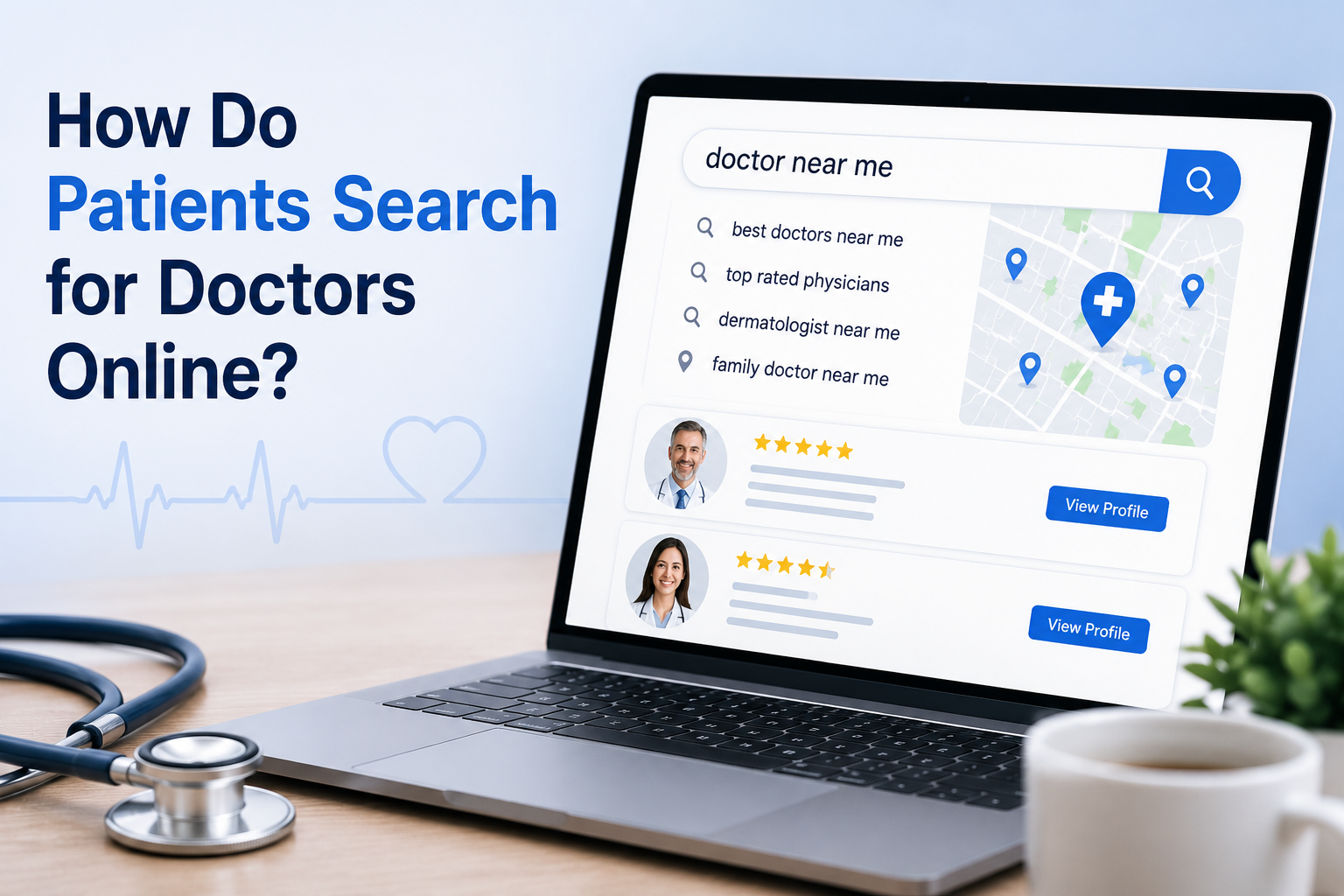
  • How Do Patients Search for Doctors Online?

    How Do Patients Search for Doctors Online?

    The way patients find healthcare providers has changed dramatically over the last decade. Gone are the days when people relied solely on referrals from family members, friends, or local directories. Today, most patients begin their healthcare journey online. Whether they need a primary care physician, dermatologist, dentist, orthopedic specialist, or pediatrician, their first step is often a search engine.

    For healthcare providers, understanding how patients search for doctors online is essential. A strong online presence can significantly impact patient acquisition, appointment bookings, and long-term practice growth. This is where Medical SEO Services play a crucial role by helping healthcare websites appear where patients are actively searching.

    In this guide, we’ll explore modern patient search behavior, the factors influencing healthcare decisions, and how medical practices can improve their online visibility.

    Why Understanding Patient Search Behavior Matters

    Patients are becoming increasingly informed and selective when choosing healthcare providers. Before booking an appointment, many individuals conduct extensive online research to compare doctors, read reviews, and evaluate their options.

    Understanding this behavior helps healthcare practices:

    • Improve online visibility
    • Attract qualified patients
    • Increase appointment requests
    • Build trust and credibility
    • Stay competitive in local markets

    Practices that ignore digital search trends risk losing patients to competitors who invest in healthcare-focused SEO strategies.

    Where Patients Search for Doctors Online

    Google Search Results

    Google remains the most popular platform for finding healthcare providers. Patients commonly search using terms such as:

    • Doctor near me
    • Best dermatologist in my area
    • Family physician accepting new patients
    • Pediatrician near me
    • Orthopedic specialist nearby

    These searches often indicate strong intent to schedule an appointment.

    Google Maps and Local Search

    Local search has become one of the most important channels for healthcare providers. Patients frequently use Google Maps to locate nearby clinics, view business hours, get directions, and compare reviews.

    Appearing in local search results can dramatically increase visibility and patient inquiries.

    Healthcare Directories

    Patients often use healthcare-specific directories to compare providers. These platforms help users review credentials, specialties, accepted insurance plans, and patient ratings.

    Review Platforms

    Online reviews strongly influence patient decisions. Many patients read multiple reviews before selecting a healthcare provider.

    Positive reviews help establish trust and improve conversion rates from website visitors to booked appointments.

    Social Media Platforms

    Many healthcare consumers also explore social media profiles to learn more about a practice, read patient feedback, and assess credibility before making a decision.

    Common Search Terms Patients Use

    Understanding patient search intent is critical for effective Medical SEO Services.

    Location-Based Searches

    Patients frequently search using location-specific terms:

    • Doctor near me
    • Cardiologist in Chicago
    • Dentist in downtown Dallas
    • Urgent care near me

    These searches typically indicate immediate healthcare needs.

    Specialty Searches

    Patients often search directly for specialists, including:

    • Dermatologist
    • Orthopedic surgeon
    • Pediatrician
    • Neurologist
    • Gastroenterologist

    Healthcare websites should optimize service pages around these specialties.

    Symptom-Based Searches

    Patients frequently begin with symptom-related searches such as:

    • Back pain treatment
    • Skin rash specialist
    • Chronic migraine doctor
    • Knee pain treatment options

    These searches create opportunities for educational content that guides users toward appropriate healthcare services.

    Insurance and Availability Searches

    Patients may also search for:

    • Doctors accepting my insurance
    • Same-day appointments
    • New patient appointments available

    Including this information on your website can improve user experience and conversions.

    The Modern Patient Search Journey

    Awareness Stage

    The patient identifies a health concern and begins researching symptoms, treatments, or healthcare providers.

    Research Stage

    The patient compares multiple providers by evaluating:

    • Reviews
    • Credentials
    • Services
    • Website content
    • Clinic location

    Comparison Stage

    Patients narrow down their choices and look for trust signals that indicate quality care.

    Decision Stage

    The patient schedules an appointment with the provider that best meets their needs.

    Understanding this journey helps practices create content that supports patients at every stage.

    Factors Patients Consider Before Choosing a Doctor

    Online Reviews and Ratings

    Reviews remain one of the strongest decision-making factors.

    Patients often prefer providers with:

    • Consistent positive reviews
    • High ratings
    • Recent patient feedback

    Experience and Credentials

    Patients want reassurance that they are receiving care from qualified professionals.

    Doctor profile pages should clearly display:

    • Education
    • Certifications
    • Specialties
    • Professional experience

    Website Quality

    A professional website helps build trust.

    Patients expect:

    Location and Convenience

    Convenient locations often influence healthcare decisions, especially for routine care and follow-up visits.

    Appointment Availability

    Easy online scheduling can improve patient acquisition and reduce barriers to booking appointments.

    How Local SEO Influences Patient Decisions

    Local SEO has become one of the most important components of healthcare marketing.

    Google Business Profile Optimization

    An optimized profile helps practices appear in local searches and map results.

    Important elements include:

    • Accurate contact details
    • Office hours
    • Photos
    • Patient reviews
    • Service descriptions

    Location Pages

    Practices serving multiple cities should create dedicated location pages to improve local relevance.

    Consistent Business Information

    Search engines rely on accurate business information across directories and websites.

    Maintaining consistency improves trust and local rankings.

    Local Content Creation

    Publishing content related to local healthcare concerns can improve visibility and engagement.

    The Role of Medical SEO Services in Patient Acquisition

    Medical SEO Services help healthcare organizations improve online visibility and attract patients actively searching for care.

    Keyword Research

    Healthcare SEO specialists identify high-intent keywords patients use during their search journey.

    On-Page Optimization

    Optimizing:

    • Title tags
    • Meta descriptions
    • Headings
    • Internal links
    • Service pages

    helps search engines understand your content.

    Technical SEO

    Technical improvements include:

    • Faster loading speeds
    • Mobile optimization
    • Secure HTTPS connections
    • Crawlability improvements

    Content Marketing

    Educational content helps build authority while attracting organic traffic.

    Reputation Management

    Managing reviews and online reputation strengthens trust and influences patient decisions.

    How AI Search Is Changing Patient Behavior

    Artificial intelligence is transforming how users discover healthcare information.

    AI Overviews

    Search engines increasingly provide direct answers within search results, reducing the need to visit multiple websites.

    Voice Search

    Patients now use voice assistants to ask questions like:

    • Where is the nearest urgent care?
    • Find a pediatrician near me.
    • Best dermatologist nearby.

    Conversational Search

    Users are searching using natural language rather than simple keywords.

    Healthcare websites should create content that directly answers patient questions.

    Topical Authority

    Search engines increasingly reward websites that demonstrate expertise across entire healthcare topics rather than isolated keywords.

    Common Mistakes That Reduce Online Visibility

    Many healthcare websites struggle because of avoidable SEO issues.

    Poor Mobile Experience

    Most healthcare searches now occur on mobile devices.

    Slow Website Performance

    Slow websites create poor user experiences and lower search rankings.

    Weak Service Pages

    Thin content often fails to rank for competitive healthcare keywords.

    Lack of Local SEO

    Ignoring local optimization limits visibility among nearby patients.

    Outdated Content

    Healthcare information should remain current and relevant.

    Best Practices to Attract More Patients Online

    Create Patient-Focused Content

    Focus on answering common patient questions rather than simply promoting services.

    Optimize Doctor Profile Pages

    Detailed provider profiles help build trust and improve search visibility.

    Encourage Reviews

    Actively requesting patient feedback can improve online reputation.

    Improve User Experience

    Simple navigation and clear calls to action increase appointment bookings.

    Invest in Medical SEO Services

    Professional healthcare SEO strategies help practices compete effectively in crowded markets.

    Why Medical SEO Services Are Essential for Growth

    Healthcare providers face increasing competition online. Patients expect accurate information, easy access, and trustworthy healthcare resources.

    Medical SEO Services help practices:

    • Increase organic traffic
    • Improve local visibility
    • Generate qualified leads
    • Build online authority
    • Increase appointment requests
    • Achieve long-term marketing success

    Unlike paid advertising, SEO provides sustainable growth and ongoing patient acquisition over time.

    Conclusion

    Patients rely heavily on online search when choosing healthcare providers. They use Google, local search results, review platforms, and healthcare directories to research doctors and compare options before scheduling appointments.

    Healthcare practices that understand this behavior can position themselves where patients are actively searching. By investing in Medical SEO Services, providers can improve visibility, build trust, attract qualified patients, and grow their practice in an increasingly digital healthcare environment.

    If your practice wants to generate more patient appointments and improve online visibility, The Medical SEO can help you develop a customized strategy designed for long-term success.

    Frequently Asked Questions

    How do most patients find doctors online?

    Most patients use Google Search, Google Maps, healthcare directories, and online reviews to locate and evaluate healthcare providers.

    Why are online reviews important for doctors?

    Reviews help build trust, influence patient decisions, and improve local search visibility.

    What is Medical SEO?

    Medical SEO is the process of optimizing healthcare websites to improve search engine rankings and attract more patients online.

    How does local SEO help medical practices?

    Local SEO improves visibility in map results and local searches, helping nearby patients discover your practice.

    How long does Medical SEO take to show results?

    Most practices begin seeing measurable improvements within three to six months, depending on competition and website condition.

    Can Medical SEO increase appointment bookings?

    Yes. Effective Medical SEO Services improve visibility, attract qualified visitors, and increase appointment requests from prospective patients.

  • How AI Overviews Affect Medical Rankings

    How AI Overviews Affect Medical Rankings

    Search has entered a new era. Google’s AI Overviews are changing how users discover information online, and healthcare websites are among the industries most affected by this transformation. Instead of displaying only traditional search results, Google can now generate AI-powered summaries that answer user questions directly within the search results page.

    For healthcare providers, hospitals, clinics, and medical practices, this shift presents both challenges and opportunities. While AI Overviews may reduce clicks for some websites, they also create new opportunities for authoritative healthcare content to gain visibility and influence patient decisions.

    As AI becomes a larger part of the search experience, healthcare organizations must understand how AI Overviews affect medical rankings and what steps they can take to maintain and improve visibility. This is where Medical SEO Services play an increasingly important role in helping healthcare websites adapt to evolving search technologies.

    What Are AI Overviews?

    How Google AI Overviews Work

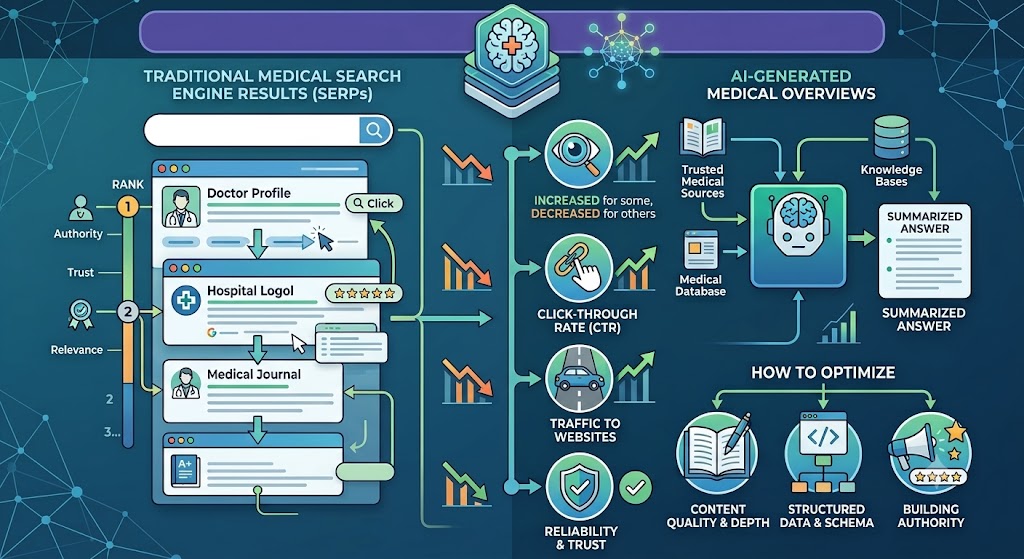
    AI Overviews are AI-generated summaries that appear at the top of certain search results. Instead of showing only a list of links, Google analyzes multiple sources and provides a direct answer to a user’s question.

    For example, if a patient searches for:

    • What causes high blood pressure?
    • Symptoms of diabetes
    • How to treat seasonal allergies

    Google may display an AI-generated summary before showing traditional organic results.

    Difference Between Traditional Search Results and AI Overviews

    Traditional search displays a list of websites ranked according to relevance and authority. Users click on individual pages to find information.

    AI Overviews provide:

    • Direct answers
    • Summarized information
    • Multiple source references
    • Faster information delivery

    This changes how users interact with search results.

    Why Healthcare Queries Frequently Trigger AI Overviews

    Healthcare topics often involve informational searches that AI systems can summarize effectively.

    Examples include:

    • Symptom-related questions
    • Treatment options
    • Preventive care advice
    • General medical education

    Because healthcare content impacts personal well-being, Google applies strict quality standards when selecting sources.

    Why AI Overviews Matter for Medical Websites

    Changes in Search Visibility

    Traditional rankings are no longer the only factor determining visibility.

    A page may rank highly but still receive fewer clicks if users obtain their answers directly from an AI Overview.

    Impact on Organic Click-Through Rates

    Many users now find the information they need without visiting a website.

    This can reduce click-through rates for informational content while increasing the importance of appearing as a trusted source within AI-generated summaries.

    Patient Search Behavior Is Evolving

    Patients increasingly expect quick, accurate answers.

    Instead of searching multiple websites, they rely on AI-generated summaries to understand:

    • Symptoms
    • Conditions
    • Treatments
    • Healthcare providers

    The New Rules of Healthcare SEO

    Success in modern search requires:

    • Expertise
    • Authority
    • Trustworthiness
    • Structured content
    • Comprehensive topic coverage

    Healthcare websites must adapt to these new expectations.

    How AI Overviews Affect Medical Rankings

    Reduced Visibility for Low-Authority Websites

    AI systems prioritize authoritative sources.

    Healthcare websites with weak content, poor credibility, or limited expertise may struggle to appear in AI-generated results.

    Increased Importance of Medical Expertise

    Medical content must demonstrate professional knowledge.

    Websites that clearly identify authors, reviewers, and credentials are more likely to gain visibility.

    Greater Focus on Content Quality

    AI systems reward content that is:

    • Accurate
    • Detailed
    • Well-structured
    • Helpful to users

    Thin content becomes less competitive.

    More Competition for Topical Authority

    Healthcare organizations must now demonstrate expertise across entire subject areas rather than focusing on isolated keywords.

    AI Overviews and Google’s E-E-A-T Standards

    Experience

    Content should reflect practical healthcare experience whenever appropriate.

    Expertise

    Medical information should be created or reviewed by qualified professionals.

    Authoritativeness

    Authority comes from:

    • Credentials
    • Industry recognition
    • Backlinks
    • Professional reputation

    Trustworthiness

    Trust signals include:

    • Secure websites
    • Accurate information
    • Transparent authorship
    • Clear contact information

    Why Medical Websites Face Higher Standards

    Healthcare websites belong to Google’s YMYL (Your Money or Your Life) category.

    Because inaccurate medical information can impact health outcomes, Google evaluates healthcare content more rigorously than many other industries.

    Common Healthcare Content That Appears in AI Overviews

    Symptom-Based Searches

    Examples:

    • Headache causes
    • Diabetes symptoms
    • Signs of heart disease

    Treatment Information

    Examples:

    • Migraine treatments
    • Physical therapy options
    • Allergy management

    Preventive Care Content

    Examples:

    • Vaccination schedules
    • Health screenings
    • Wellness tips

    Healthcare FAQs

    Well-structured FAQ content often aligns well with AI-generated responses.

    Doctor and Specialty Information

    Patients frequently search for information about specialists and treatment options.

    Why Some Medical Websites Lose Rankings After AI Overviews

    Thin Content

    Pages with limited information provide little value compared to comprehensive resources.

    Outdated Medical Information

    Healthcare information evolves continuously.

    Outdated content may lose visibility as search engines prioritize current information.

    Weak Authority Signals

    Websites lacking expertise indicators may struggle to compete.

    Poor Content Structure

    Large blocks of text without headings, FAQs, or logical organization can reduce content accessibility.

  • Can Small Clinics Benefit from Medical SEO Services?

    Can Small Clinics Benefit from Medical SEO Services?

    The healthcare landscape has changed significantly in the digital era. Patients no longer rely solely on referrals or offline recommendations when choosing a clinic. Instead, they turn to search engines to find reliable healthcare providers in their area. This shift has made online visibility a critical factor for success, especially for smaller practices.

    For small clinics, competing with large hospitals may seem challenging, but it is not impossible. With the right strategy, even a small clinic can dominate local search results. This is where Medical SEO Services become essential. These services help clinics appear in search results when potential patients are actively looking for medical care.

    By using seo for medical practices, clinics can attract targeted traffic, improve credibility, and generate consistent patient inquiries. Unlike paid advertising, SEO focuses on long-term growth and sustainable results, making it ideal for clinics with limited marketing budgets.

    Medical SEO Services
    Patient searching for a doctor on a smartphone in a clinic

    Why Medical SEO Services Are Important for Small Clinics

    Small clinics often face limitations when it comes to marketing resources. Paid advertising can deliver quick results, but it requires continuous investment. SEO offers a more cost-effective solution that provides long-term benefits.

    Key Benefits

    • Higher visibility in search results
    • Increased traffic from relevant patients
    • Lower long-term marketing costs
    • Improved trust and credibility
    • Continuous patient acquisition

    Using seo for medical websites allows clinics to build a strong online presence that works around the clock.

    How Medical SEO Works for Clinics

    SEO involves multiple strategies that work together to improve search engine rankings and attract patients.

    Keyword Optimization

    Keywords are the foundation of SEO. These are the terms patients use when searching for healthcare services.

    Examples include doctor near me, best clinic in a city, and specialist consultation. Targeting the right keywords ensures your clinic appears in relevant searches.

    On Page SEO

    On page SEO focuses on optimizing website content and structure.

    Important elements include proper heading structure, optimized meta titles and descriptions, fast loading speed, and mobile friendly design. These factors improve both user experience and search rankings.

    Local SEO

    Local SEO is essential for small clinics because most patients search for nearby services.

    Key components include Google Business Profile optimization, local directory listings, and patient reviews. This ensures your clinic appears in local search results.

    Content Marketing

    Publishing valuable content helps build authority and improves rankings for seo for medical clinics. Blogs, guides, and health tips attract and educate patients.

    SEO workflow diagram showing keyword research and ranking growth

    Can Small Clinics Compete with Large Hospitals

    Small clinics can compete effectively, especially in local search results. Large hospitals may have bigger budgets, but small clinics have advantages that can be leveraged through SEO.

    Advantages

    • Strong local focus
    • Personalized patient care
    • Faster service delivery

    With Medical SEO Services, clinics can target specific locations and niche services, making it easier to rank higher and attract relevant patients.

    SEO vs Paid Advertising

    Factor SEO Paid Ads
    Cost Lower long term High recurring
    Results Gradual and lasting Immediate but temporary
    Trust High Moderate
    ROI Long term growth Short term gains

    SEO provides sustainable growth, while paid ads offer quick visibility but require continuous spending.

    Comparison infographic SEO vs paid advertising

    Effective SEO Strategies for Small Clinics

    Website Optimization

    Ensure your website is mobile friendly, fast loading, and easy to navigate. A well structured website improves user experience and search rankings.

    Local SEO

    Use location based keywords, optimize your Google Business Profile, and collect positive patient reviews to improve local visibility.

    Content Creation

    Publish informative blogs that answer patient questions and provide valuable insights. This improves engagement and rankings.

    Link Building

    Build backlinks through business directories, guest posting, and healthcare websites to increase authority.

    Doctor writing blog content with SEO icons

    Common SEO Mistakes to Avoid

    • Keyword stuffing
    • Ignoring mobile optimization
    • Not updating content
    • Weak local SEO strategy
    • Poor website design

    Avoiding these mistakes ensures better performance for seo for medical practices.

    How Long Does SEO Take

    SEO is a long term strategy that requires patience and consistency.

    Timeline

    One to three months for initial improvements, three to six months for ranking growth, and six to twelve months for strong traffic and leads.

    Internal Linking Suggestions

    Healthcare SEO Guide with anchor seo for medical websites

    Local SEO Strategies with anchor seo for medical clinics

    Services Page with anchor Medical SEO Services

    FAQs

    What are Medical SEO Services

    Medical SEO Services help clinics improve online visibility and attract patients through search engines.

    Is SEO effective for small clinics

    Yes, SEO provides long term growth and better return on investment.

    Can SEO bring local patients

    Yes, local SEO targets nearby users searching for healthcare services.

    How long does SEO take

    Typically three to six months for noticeable results.

    Do clinics need blog content

    Yes, regular content improves rankings and builds trust.

    Conclusion

    Small clinics can benefit greatly from Medical SEO Services. By focusing on local SEO, content marketing, and website optimization, clinics can compete effectively with larger healthcare providers.

    SEO is not just about rankings. It is about connecting with patients at the right moment and building long term trust.

    Call to Action

    Ready to grow your clinic and attract more patients online

    Partner with The Medical SEO and take your healthcare marketing to the next level.

  • How Does SEO Increase Clinic Revenue?

    How Does SEO Increase Clinic Revenue?

    As a clinic owner, your primary goal is to provide exceptional care, but to do that, you need a steady stream of patients. In the digital age, the bridge between a patient’s health concern and your waiting room is almost always a search engine. When you optimize your digital presence, you aren’t just improving your rankings; you are directly impacting your bottom line.

    Here is an analysis of how seo for medical practices serves as a powerful driver for financial growth and practice sustainability.

    1. Attracting High-Intent Patients

    The most significant advantage of SEO is the quality of traffic it generates. Unlike traditional “outbound” marketing—like billboards or mailers that reach people regardless of their current health needs—SEO is “inbound.” It targets individuals who are actively searching for a specific treatment, specialist, or symptom relief.

    By leveraging Medical SEO Services, you position your clinic in front of “high-intent” users. These are people ready to book an appointment immediately. Because these leads are already looking for the services you provide, they convert at a much higher rate than cold leads, leading to a faster and more consistent increase in revenue.

    2. Lowering Patient Acquisition Costs (PAC)

    Marketing spend can quickly drain a clinic’s budget if not managed efficiently. Paid advertising (PPC) requires a continuous infusion of cash; the moment you stop paying, the leads disappear.

    Medical SEO Services

    In contrast, seo for medical websites is an investment in a long-term asset. While it takes time to build momentum, a high-ranking website generates “organic” traffic that doesn’t cost you per click. Over time, as your rankings stabilize, your cost per patient acquisition drops significantly. This efficiency allows you to keep more of your revenue as profit or reinvest it into better medical technology.

    3. Dominating the Local Market

    For most healthcare providers, the majority of revenue comes from the local community. When a resident nearby searches for a “doctor near me,” Google’s local algorithm prioritizes the “Map Pack”—the top three local business listings.

    Strategic seo for medical clinics focuses heavily on local visibility. By optimizing your Google Business Profile and local citations, you ensure that your clinic is the first one patients see. Since local searchers often have urgent needs, being in that top spot ensures you capture the lion’s share of local foot traffic and new patient registrations.

    4. Enhancing Credibility and Case Value

    Patients tend to equate search engine rankings with professional authority. When your practice consistently appears at the top for complex procedures or specialized care, it builds a layer of trust before the first phone call is even made.

    This “digital authority” allows you to attract patients who are looking for expertise rather than just the lowest price. By focusing on SEO, you can shift your patient mix toward higher-value cases and specialized procedures, which typically offer better margins and contribute more significantly to your clinic’s total revenue.

    5. Streamlining the Patient Journey

    Modern SEO is deeply intertwined with User Experience (UX). Google favors websites that are fast, mobile-friendly, and easy to navigate. When you optimize your site, you are simultaneously making it easier for a patient to convert.

    An optimized site removes the “friction” that causes potential patients to leave. Features like clear call-to-action buttons, easy-to-find contact information, and fast-loading service pages ensure that once a patient finds you, they actually stay to book an appointment. Every bounced visitor is a lost revenue opportunity; SEO ensures you capture as many of those opportunities as possible.

    Maximize Your Clinic’s Potential

    The connection between search visibility and financial health is undeniable. If your clinic isn’t appearing where patients are looking, you are essentially handing revenue to your competitors.

    To see how your current digital presence measures up and to start building a more profitable future, we invite you to Contact Us for a detailed consultation.

    Frequently Asked Questions

    1. Does SEO help with high-ticket medical procedures?

    Yes. Patients researching elective or high-cost procedures often conduct extensive online research. SEO allows you to provide the educational content they need during their decision-making process, positioning your clinic as the trusted authority for that specific high-value service.

    2. How does mobile optimization affect my revenue?

    Over 60% of healthcare searches happen on mobile devices. If your site is hard to use on a phone, patients will leave. A mobile-optimized site ensures you don’t lose the “on-the-go” searchers who are often looking for immediate care.

    3. What is the difference between SEO and medical marketing?

    SEO is a specific branch of marketing focused on earning traffic through search engines. While general marketing includes branding and PR, SEO is the technical and creative process of ensuring your clinic is findable when patients have a specific medical need.

    4. How do online reviews impact my SEO and revenue?

    Reviews are a major ranking factor for local SEO. Positive reviews signal to Google that your clinic is trustworthy, which improves your ranking. Furthermore, patients are more likely to choose a clinic with high ratings, directly increasing your booking rates.

    5. Is SEO a one-time project for my website?

    No. SEO requires ongoing maintenance. Search algorithms change, and competitors are always trying to outrank you. Continuous updates to your content and technical health are required to maintain your top positions and keep the patient revenue flowing consistently.


  • What Metrics Matter in Medical SEO?

    What Metrics Matter in Medical SEO?

    If you want your healthcare practice to grow online, you need more than just a website—you need clarity on what actually works. That’s where tracking the right metrics comes in. When you invest in seo for medical practices, your success depends on how well you measure performance, interpret data, and take action.

    You’re not just competing for clicks—you’re competing for patient trust. So, instead of chasing vanity numbers, you should focus on metrics that directly impact visibility, engagement, and patient conversions.

    Let’s break down the metrics that truly matter and how you can use them to strengthen your strategy.

    1. Organic Traffic: Your Visibility Foundation

    The first thing you should monitor is organic traffic—how many users find your website through search engines.

    If your seo for medical websites strategy is effective, you’ll notice a steady increase in visitors coming from Google and other search engines. But don’t stop at total numbers. Dive deeper:

    • Which pages attract the most visitors?
    • Are blog posts outperforming service pages?
    • Are visitors landing on the right pages?

    Actionable tip:
    Use Google Analytics to identify top-performing pages and replicate their structure, keyword usage, and content depth across other pages.

    2. Keyword Rankings: Are You Being Found?

    Ranking for the right keywords determines whether patients can find you when they need care.

    For example, if you target terms like seo for medical clinics or service-specific queries (e.g., “pediatrician near me”), your rankings should improve over time.

    Focus on:

    • Local keywords (location + service)
    • Long-tail keywords (specific patient concerns)
    • Branded vs non-branded searches

    Actionable tip:
    Track 10–20 high-intent keywords weekly. If rankings drop, update content with better information, FAQs, and internal links.

    3. Click-Through Rate (CTR): Turning Impressions into Visits

    Ranking high is only half the battle. If users don’t click your listing, your visibility doesn’t convert into traffic.

    CTR tells you how compelling your search listing is. It depends on:

    • Title tags
    • Meta descriptions
    • Rich snippets (reviews, FAQs)

    Actionable tip:
    Rewrite meta descriptions to directly address patient needs, such as symptoms, urgency, or benefits. For example:
    “Get fast, reliable treatment from experienced specialists—book your appointment today.”

    4. Bounce Rate: First Impressions Matter

    When a visitor lands on your website and leaves without interacting, that’s a bounce.

    A high bounce rate often means:

    • Your content didn’t match search intent
    • Your page loaded too slowly
    • Your design isn’t user-friendly

    In Medical SEO Services, reducing bounce rate is essential because it signals quality to search engines.

    Actionable tip:
    Ensure your pages answer the user’s question within the first few seconds. Use clear headings, concise paragraphs, and visible calls-to-action.

    5. Conversion Rate: The Metric That Drives Revenue

    Traffic is useless if it doesn’t turn into patients.

    Your conversion rate measures how many visitors:

    • Book appointments
    • Call your clinic
    • Fill out contact forms

    This is where your seo for medical practices strategy proves its real value.

    Actionable tip:
    Simplify your booking process. Reduce the number of steps required to schedule an appointment and ensure your contact details are easy to find.

    6. Local SEO Metrics: Winning in Your Area

    For healthcare providers, local visibility is everything.

    Track:

    • Google Business Profile views
    • Calls from local listings
    • Direction requests
    • Local keyword rankings

    Your seo for medical clinics efforts should prioritize appearing in local map packs.

    Actionable tip:
    Keep your Google Business Profile updated with accurate hours, services, and patient reviews.

    7. Page Load Speed: Performance Impacts Rankings

    Patients won’t wait for slow websites. Neither will Google.

    A delay of even a few seconds can:

    • Increase bounce rate
    • Reduce conversions
    • Lower rankings

    Actionable tip:
    Compress images, use fast hosting, and eliminate unnecessary plugins or scripts.

    8. Backlinks: Building Authority and Trust

    Backlinks—links from other websites to yours—signal credibility.

    In the healthcare industry, high-quality backlinks from:

    • Medical directories
    • Health blogs
    • Local business listings

    can significantly boost your seo for medical websites performance.

    Actionable tip:
    Focus on quality over quantity. A few authoritative links are more valuable than dozens of low-quality ones.

    9. Content Engagement: Are Patients Reading?

    Engagement metrics show how users interact with your content:

    • Time on page
    • Scroll depth
    • Pages per session

    If users stay longer, it means your content is relevant and helpful.

    Actionable tip:
    Write content that directly answers patient questions. Use simple language, bullet points, and real-life examples.

    10. Mobile Usability: Meeting Patient Expectations

    Most patients search for healthcare services on their phones.

    If your site isn’t mobile-friendly, you’ll lose potential patients.

    Actionable tip:
    Test your website on multiple devices. Ensure buttons are clickable, text is readable, and navigation is smooth.

    11. Patient Reviews and Reputation Signals

    Online reviews influence both SEO and patient decisions.

    Search engines consider:

    • Review quantity
    • Review quality
    • Response rate

    Actionable tip:
    Encourage satisfied patients to leave reviews and respond professionally to all feedback.

    12. Tracking ROI: Measuring What Matters Most

    Ultimately, your goal is to understand the return on your SEO investment.

    Track:

    • Cost per lead
    • Revenue generated from organic traffic
    • Appointment growth over time

    This helps you refine your Medical SEO Services strategy and focus on what delivers results.

    Strengthening Your Strategy with the Right Actions

    Tracking metrics is only useful if you act on them. Here’s how you can stay ahead:

    • Audit your website monthly
    • Update outdated content regularly
    • Optimize underperforming pages
    • Invest in local SEO improvements
    • Continuously refine your keyword strategy

    If you want expert guidance, consider exploring professional seo for medical practices solutions tailored to your needs. For personalized strategies and support, visit our Contact Us page to connect with specialists who understand your goals.

    Conclusion

    You don’t need to track every possible metric—just the ones that truly impact your growth.

    When you focus on organic traffic, keyword rankings, conversions, and user experience, you build a strong foundation for success. Whether you’re improving seo for medical clinics or expanding your reach through advanced Medical SEO Services, the key is consistency and data-driven decisions.

    By understanding and acting on these metrics, you put your practice in a position to attract more patients, build trust, and grow sustainably.

    FAQs

    1. What is the most important metric in medical SEO?
      Conversion rate is the most important because it shows how many visitors become patients, directly impacting revenue.
    2. How long does it take to see results from SEO for medical practices?
      It typically takes 3–6 months to see noticeable improvements, depending on competition and strategy consistency.
    3. Why is local SEO important for medical clinics?
      Local SEO helps your clinic appear in nearby searches, making it easier for patients in your area to find and contact you.
    4. How can I improve my website’s SEO performance?
      Focus on high-quality content, fast loading speed, mobile optimization, and targeted keywords like seo for medical websites.
    5. Do Medical SEO Services really help?
      Yes, they provide expertise, strategy, and optimization techniques that improve rankings, traffic, and patient conversions efficiently.


  • How to Track Your Medical SEO Performance

    How to Track Your Medical SEO Performance

    You’ve invested time, budget, and energy into optimizing your digital presence. But in the world of healthcare marketing, “guessing” isn’t a strategy—it’s a liability. Whether you are running a multi-specialty hospital or a boutique practice, you need to know if your Medical SEO Services are actually moving the needle or just idling in neutral.

    Tracking performance isn’t just about watching a line go up on a graph; it’s about understanding patient behavior and ensuring your expertise reaches those who need it most. Here is your actionable guide to measuring success in the competitive landscape of healthcare search.

    1. Define Your Vital Signs: Key Performance Indicators (KPIs)

    Before diving into tools, you must identify which metrics actually correlate with practice growth.

    • Organic Sessions: This is the bread and butter of seo for medical websites. It measures how many people found you through a search engine without clicking an ad.
    • Keyword Rankings for High-Intent Terms: It’s great to rank for “what is a sprain,” but it’s better to rank for “orthopedic surgeon near me.”
    • Conversion Rate (Form Fills & Calls): A million visitors mean nothing if your phones aren’t ringing.
    • Local Pack Visibility: For seo for medical clinics, appearing in the “Map Pack” is often more valuable than the first organic blue link.

    2. Monitor Organic Traffic Quality

    Not all traffic is created equal. You might see a spike in visitors because a blog post about “healthy smoothie recipes” went viral, but did that result in more patients in your waiting room?

    When tracking seo for medical practices, look at the Landing Page report in Google Analytics 4 (GA4). If your service pages (e.g., “Cardiology Services” or “Knee Replacement Surgery”) are seeing steady growth, your SEO strategy is healthy. If only your off-topic blog posts are growing, you need to realign your content with your clinical goals.

    3. Track Local SEO and Google Business Profile (GBP)

    For a local clinic, the Google Business Profile is your digital front door. You should track:

    • Direct vs. Discovery Searches: Are people searching for your specific name, or are they finding you by searching for a “pediatrician”?
    • Interaction Metrics: Track how many people clicked to “Call,” “Get Directions,” or “Visit Website” directly from the search results.
    • Review Velocity: The frequency and quality of new reviews directly impact your local ranking.

    4. Search Console: The Direct Line to Google

    Google Search Console (GSC) is the most honest tool in your kit. It tells you exactly which queries patients typed to find you.

    • Click-Through Rate (CTR): If you rank #2 for a major surgery keyword but no one is clicking, your Meta Titles or Descriptions might be unappealing or lack a clear Call to Action.
    • Core Web Vitals: Patient experience starts with speed. If your site is slow or jumpy on mobile, Google will penalize your rankings, and patients will bounce.

    5. Measuring Patient Conversion (The Ultimate Goal)

    At the end of the day, SEO is a tool for patient acquisition. To track this effectively, implement Event Tracking in GA4.

    • Phone Call Tracking: Use dynamic number insertion to see which callers came specifically from an organic search.
    • Appointment Requests: Tag your “Book Now” buttons so you can see the exact path a patient took—from a Google search to a confirmed consultation.

    Conclusion

    Tracking SEO performance is a marathon, not a sprint. By focusing on high-intent traffic, local visibility, and actual patient conversions, you ensure that your digital strategy supports your clinical mission. If you find the technical side of data tracking overwhelming, don’t hesitate to reach out and Contact Us to help streamline your reporting.

    Frequently Asked Questions

    1. How long does it take to see SEO results for a medical clinic?

    Typically, it takes 4 to 6 months to see significant movement. SEO is a long-term investment. While technical fixes might show immediate small gains, ranking for competitive medical terms requires consistent authority building and content updates over several months.

    2. Which tool is best for tracking medical keyword rankings?

    Google Search Console is the most accurate for actual performance. However, third-party tools like SEMrush or Ahrefs are excellent for monitoring competitor movements and identifying new keyword opportunities that your practice hasn’t targeted yet.

    3. Does social media activity affect my medical SEO?

    Social media doesn’t directly improve rankings, but it has an indirect impact. High engagement can drive traffic to your site and increase brand searches, which signals to Google that your practice is a trusted authority in the healthcare space.

    4. Why is my organic traffic high but my appointments low?

    This usually indicates a “Conversion Rate Optimization” (CRO) issue. Your content might be attracting “information seekers” rather than “appointment seekers,” or your website might be difficult to navigate, making it hard for patients to find your contact information.

    5. How often should I check my SEO reports?

    For most practices, a monthly deep dive is ideal. Checking daily can lead to overreacting to minor fluctuations. Monthly reporting allows you to see genuine trends, filter out seasonal “noise,” and make data-driven decisions for the following month.


  • What Is Schema in Medical SEO?

    What Is Schema in Medical SEO?

    If you want your healthcare website to stand out in search results, you need more than just good content—you need structure. That’s where schema comes in. When you understand and apply schema correctly, you make it easier for search engines to interpret your content, which directly impacts your visibility, credibility, and patient acquisition.

    In this guide, you’ll learn exactly what schema is, why it matters, and how you can use it effectively as part of your strategy for seo for medical practices.

    Understanding Schema in Simple Terms

    Schema, also known as structured data, is a type of code you add to your website to help search engines understand your content better. Think of it as a translator between your website and search engines like Google.

    When you implement schema, you’re not changing what users see—you’re improving how search engines interpret your information. This is especially important in healthcare, where accuracy, trust, and clarity are critical.

    Why Schema Matters for Medical SEO

    If you’re working on seo for medical websites, schema gives you a competitive advantage. Here’s how it helps:

    1. Improves Search Visibility

    Schema enables rich results like star ratings, FAQs, and clinic details. These enhanced listings stand out, increasing your click-through rate.

    2. Builds Trust and Credibility

    Search engines prioritize reliable medical information. Schema helps validate your content, which is crucial for healthcare-related queries.

    3. Enhances Local SEO

    For seo for medical clinics, local visibility is essential. Schema helps search engines display your address, hours, and contact details accurately.

    4. Supports Voice Search

    More patients are using voice assistants to find doctors. Schema makes your content more accessible for voice search results.

    Types of Schema Relevant to Medical Websites

    To succeed with Medical SEO Services, you need to focus on the right types of schema. Here are the most important ones:

    1. Medical Organization Schema

    This defines your clinic, hospital, or practice. It includes:

    • Name
    • Address
    • Contact details
    • Specialties

    2. Physician Schema

    Use this to highlight individual doctors, their qualifications, and expertise.

    3. Local Business Schema

    Essential for seo for medical clinics, this helps you appear in local searches and Google Maps.

    4. FAQ Schema

    Allows your FAQs to appear directly in search results, improving visibility and engagement.

    5. Review Schema

    Displays patient reviews and ratings, increasing trust and conversions.

    How You Can Implement Schema Effectively

    If you’re serious about improving seo for medical practices, you need a practical approach. Here’s how you can implement schema step-by-step:

    Step 1: Identify Key Pages

    Focus on:

    • Homepage
    • Service pages
    • Doctor profiles
    • Contact page

    These pages benefit most from structured data.

    Step 2: Choose the Right Schema Type

    Match schema types to your content. For example:

    • Use Physician schema for doctor profiles
    • Use FAQ schema for informational pages

    Step 3: Use JSON-LD Format

    Google recommends JSON-LD because it’s easy to implement and doesn’t interfere with your website design.

    Step 4: Test Your Schema

    Use tools like Google’s Rich Results Test to ensure your schema is working properly.

    Step 5: Keep It Updated

    Medical information changes frequently. Make sure your schema reflects accurate and current data.

    Best Practices for Schema in Medical SEO

    To maximize the impact of your schema, follow these best practices:

    Be Accurate

    Incorrect schema can harm your rankings. Always ensure your data is correct and consistent.

    Avoid Overuse

    Adding too much schema can confuse search engines. Focus on quality, not quantity.

    Prioritize User Intent

    Schema should support your content—not replace it. Always write for patients first.

    Align with Your SEO Strategy

    Schema works best when integrated into a broader plan for seo for medical websites.

    Common Mistakes You Should Avoid

    Even if you understand schema, small mistakes can limit your results.

    1. Ignoring Local Schema

    If you skip local business schema, you miss out on valuable local traffic.

    2. Using Outdated Information

    Old phone numbers or incorrect hours can damage trust and SEO performance.

    3. Not Testing Implementation

    Unverified schema may not work at all. Always test before publishing.

    4. Overlooking Mobile Optimization

    Schema should support a mobile-friendly experience, especially for healthcare users.

    How Schema Impacts Patient Acquisition

    When done correctly, schema doesn’t just improve rankings—it brings in more patients.

    Here’s how:

    • Your listings look more attractive in search results
    • Patients find accurate information quickly
    • Trust is built before they even visit your site

    This is why many providers invest in Medical SEO Services to handle schema implementation professionally.

    Integrating Schema Into Your Overall SEO Strategy

    Schema is not a standalone solution—it’s part of a bigger picture. To get the best results:

    • Combine schema with keyword optimization
    • Create high-quality, informative content
    • Optimize your website speed and usability
    • Build strong local SEO signals

    When all these elements work together, your seo for medical clinics becomes significantly more effective.

    Where to Add Strategic Anchor Text

    To strengthen your internal linking and SEO performance, naturally include:

    • Learn more about seo for medical practices on your service pages
    • Direct users to your Contact Us page for appointments and inquiries

    These anchor texts improve navigation and help search engines understand your site structure.

    Final Thoughts

    Schema is one of the most underutilized tools in medical SEO, yet it can deliver powerful results when used correctly. By implementing structured data, you make your website more understandable, trustworthy, and visible to both search engines and patients.

    If you’re serious about growing your practice online, schema should be a core part of your strategy for seo for medical websites and seo for medical practices. Whether you handle it yourself or invest in professional Medical SEO Services, the key is to start now and stay consistent.

    FAQs

    1. What is schema in medical SEO?

    Schema is structured data that helps search engines understand your medical website content, improving visibility and search result appearance.

    2. Does schema improve rankings?

    Schema doesn’t directly boost rankings but increases click-through rates and visibility, which can indirectly improve SEO performance.

    3. Is schema necessary for medical websites?

    Yes, especially for seo for medical clinics, as it enhances local SEO, credibility, and patient trust.

    4. How do I add schema to my site?

    You can add schema using JSON-LD format through your website’s code or with plugins if you use CMS platforms.

    5. Can I use schema without technical skills?

    Yes, but it’s easier with professional Medical SEO Services or tools that simplify structured data implementation.