

The Future of Medical SEO in AI Search
Jun 30, 2026


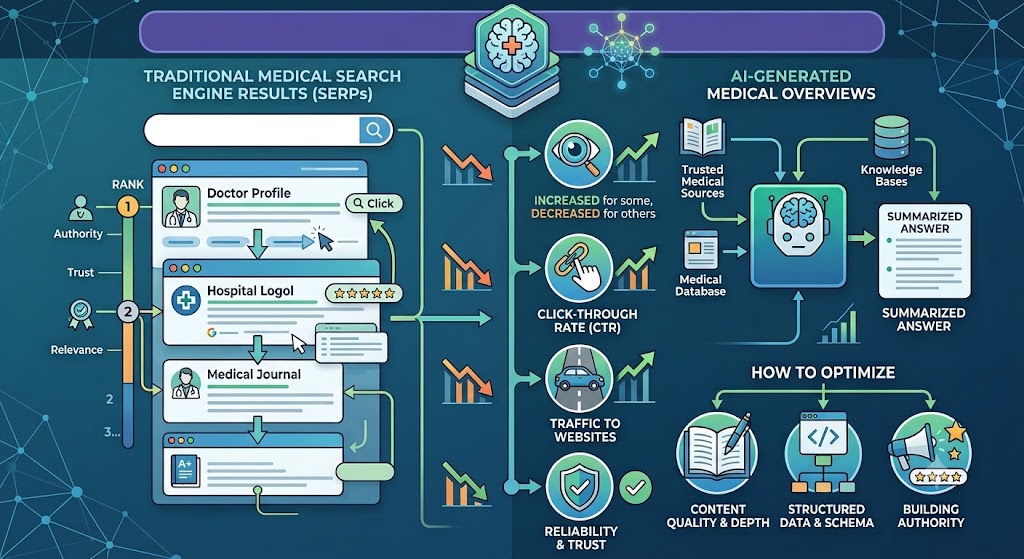
Search has entered a new era. Google’s AI Overviews are changing how users discover information online, and healthcare websites are among the industries most affected by this transformation. Instead of displaying only traditional search results, Google can now generate AI-powered summaries that answer user questions directly within the search results page.
For healthcare providers, hospitals, clinics, and medical practices, this shift presents both challenges and opportunities. While AI Overviews may reduce clicks for some websites, they also create new opportunities for authoritative healthcare content to gain visibility and influence patient decisions.
As AI becomes a larger part of the search experience, healthcare organizations must understand how AI Overviews affect medical rankings and what steps they can take to maintain and improve visibility. This is where Medical SEO Services play an increasingly important role in helping healthcare websites adapt to evolving search technologies.
AI Overviews are AI-generated summaries that appear at the top of certain search results. Instead of showing only a list of links, Google analyzes multiple sources and provides a direct answer to a user’s question.
For example, if a patient searches for:
Google may display an AI-generated summary before showing traditional organic results.
Traditional search displays a list of websites ranked according to relevance and authority. Users click on individual pages to find information.
AI Overviews provide:
This changes how users interact with search results.
Healthcare topics often involve informational searches that AI systems can summarize effectively.
Examples include:
Because healthcare content impacts personal well-being, Google applies strict quality standards when selecting sources.
Traditional rankings are no longer the only factor determining visibility.
A page may rank highly but still receive fewer clicks if users obtain their answers directly from an AI Overview.
Many users now find the information they need without visiting a website.
This can reduce click-through rates for informational content while increasing the importance of appearing as a trusted source within AI-generated summaries.
Patients increasingly expect quick, accurate answers.
Instead of searching multiple websites, they rely on AI-generated summaries to understand:
Success in modern search requires:
Healthcare websites must adapt to these new expectations.
AI systems prioritize authoritative sources.
Healthcare websites with weak content, poor credibility, or limited expertise may struggle to appear in AI-generated results.
Medical content must demonstrate professional knowledge.
Websites that clearly identify authors, reviewers, and credentials are more likely to gain visibility.
AI systems reward content that is:
Thin content becomes less competitive.
Healthcare organizations must now demonstrate expertise across entire subject areas rather than focusing on isolated keywords.
Content should reflect practical healthcare experience whenever appropriate.
Medical information should be created or reviewed by qualified professionals.
Authority comes from:
Trust signals include:
Healthcare websites belong to Google’s YMYL (Your Money or Your Life) category.
Because inaccurate medical information can impact health outcomes, Google evaluates healthcare content more rigorously than many other industries.
Examples:
Examples:
Examples:
Well-structured FAQ content often aligns well with AI-generated responses.
Patients frequently search for information about specialists and treatment options.
Pages with limited information provide little value compared to comprehensive resources.
Healthcare information evolves continuously.
Outdated content may lose visibility as search engines prioritize current information.
Websites lacking expertise indicators may struggle to compete.
Large blocks of text without headings, FAQs, or logical organization can reduce content accessibility.