Category: Uncategorized

  • Why Reputation Management Matters in Medical SEO Services

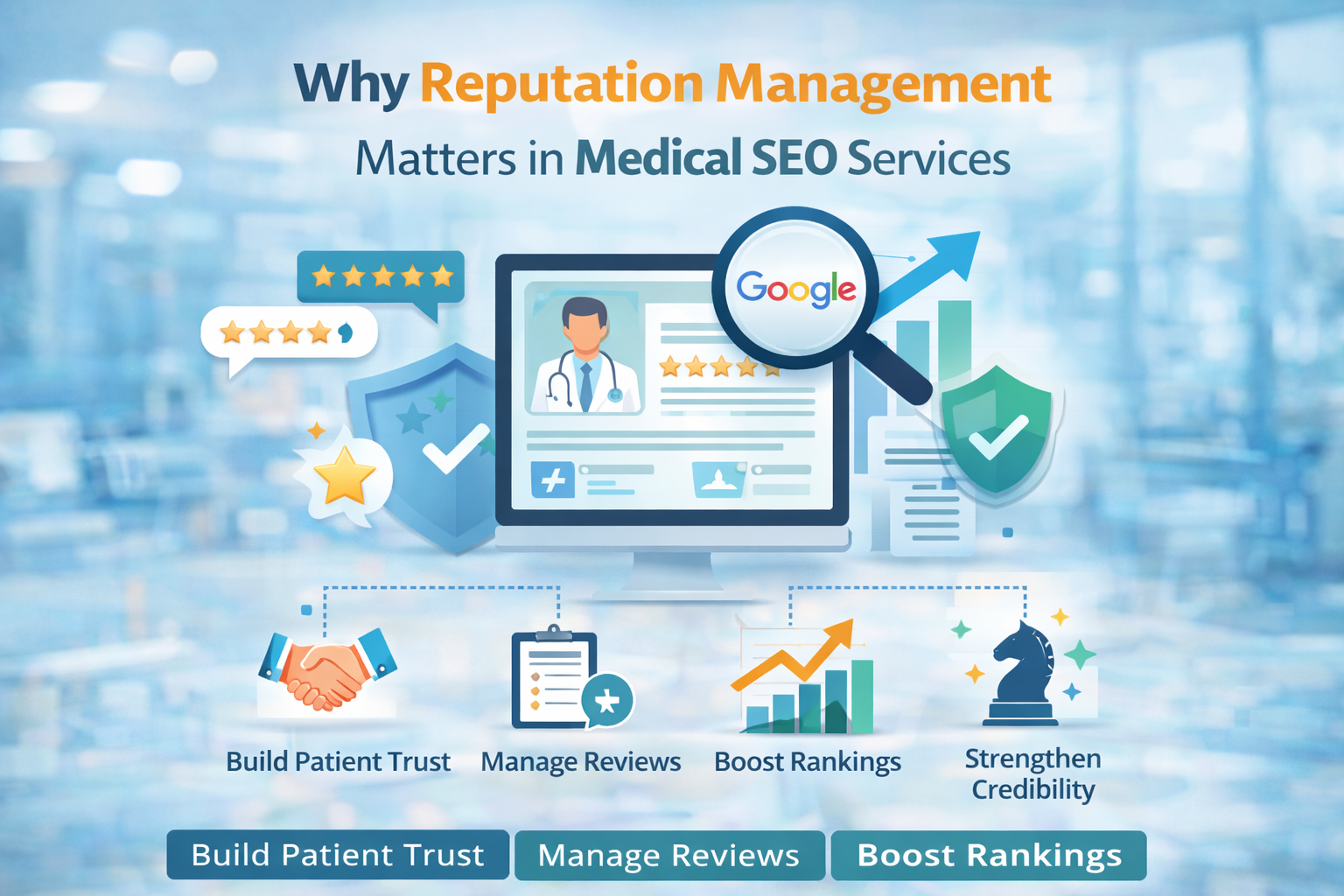
    Why Reputation Management Matters in Medical SEO Services

    In the digital era, a healthcare provider’s reputation is often built online before a patient ever walks through the door. Patients today rely heavily on search engines and online reviews to decide which doctors, clinics, or hospitals to trust. This is where The Medical SEO comes into play—helping healthcare professionals not only enhance their online visibility but also safeguard their online reputation. Reputation management is no longer a luxury in the healthcare sector; it’s a necessity that directly affects patient trust, credibility, and long-term success.

    Understanding Reputation Management in the Medical Field

    Reputation management in medical SEO refers to the process of monitoring, improving, and maintaining a healthcare provider’s online image. It involves managing patient reviews, responding to feedback, optimizing search results, and promoting positive content that reflects professionalism and patient satisfaction.

    For medical practices, reputation management isn’t just about public relations—it’s about protecting the integrity of your medical brand. A single negative review or misleading post can significantly impact how potential patients perceive your services. In a highly competitive healthcare market, a strong online reputation can make the difference between an overflowing appointment book and an empty waiting room.

    Why Reputation Management Is Vital for Medical SEO Success

    1. Patients Trust Reviews Before Appointments

    Studies show that over 80% of patients check online reviews before booking an appointment. Whether it’s Google, Healthgrades, or RateMDs, online feedback shapes patient choices. If your medical practice lacks positive reviews or has unresolved complaints, it can drive potential patients away. Effective SEO strategies ensure that your best patient experiences are visible online—right where potential patients are looking.

    2. Search Engines Value Credibility

    Google prioritizes trustworthy and authoritative content, especially in the medical field, where misinformation can have serious consequences. Reputation management helps establish “E-E-A-T” signals—Expertise, Experience, Authoritativeness, and Trustworthiness—which are key ranking factors in Google’s algorithm. When The Medical SEO optimizes your online presence, it helps Google recognize your brand as a credible and reliable healthcare source.

    3. Building Patient Trust and Loyalty

    Trust is the foundation of healthcare relationships. Patients are more likely to remain loyal to medical practices that maintain transparency and professionalism online. Regularly responding to patient feedback, whether positive or negative, shows that your practice values patient opinions and strives for continuous improvement. Over time, this consistent engagement nurtures loyalty and long-term patient relationships.

    4. Controlling the Narrative About Your Practice

    In the digital space, anyone can post content about your practice. Without proper management, false or misleading information can spread quickly. Reputation management allows you to take control of your online narrative. By promoting accurate and positive information through blogs, press releases, testimonials, and social media, you can ensure that your brand’s story remains authentic and trustworthy.

    5. Reducing the Impact of Negative Publicity

    No business is immune to negative feedback. What matters is how you handle it. When a patient leaves a negative review, a timely and professional response can turn the situation around. Addressing concerns publicly demonstrates accountability and compassion—two traits patients deeply value. Moreover, reputation management can help suppress negative content through strategic SEO techniques, ensuring that positive content dominates search results.

    The Connection Between Reputation and SEO

    Reputation management and SEO work hand-in-hand. SEO brings visibility, while reputation management ensures that visibility builds trust. For instance:

    • Positive reviews boost local SEO rankings and improve click-through rates.
    • High-quality content establishes authority and enhances user engagement.
    • Active social media presence strengthens brand credibility and drives more patient interactions.
    • Optimized Google Business Profiles improve local search visibility and showcase positive patient feedback.

    When these elements are aligned, your online presence becomes both visible and respected. That’s the power of strategic reputation management integrated with medical SEO.

    How The Medical SEO Strengthens Reputation Management

    At the heart of The Medical SEO’s approach lies a deep understanding of patient psychology and search engine behavior. The company uses advanced SEO tools and proven strategies to help healthcare providers maintain a clean, professional, and trustworthy online image.

    Here’s how the process typically works:

    • Monitoring and Analysis: Continuous tracking of reviews, mentions, and online discussions about your practice.
    • Review Generation and Management: Encouraging satisfied patients to share their experiences while addressing negative reviews constructively.
    • Content Optimization: Publishing informative blogs, patient education resources, and success stories that highlight your medical expertise.
    • Crisis Management: Handling reputation crises swiftly to minimize damage and restore trust.
    • Local SEO Enhancement: Ensuring that your Google Business Profile, maps, and directories reflect accurate, positive information.

    By combining SEO expertise with reputation management, The Medical SEO ensures that your practice not only ranks higher in search results but also earns the confidence of potential patients.

    The Long-Term Benefits of Strong Reputation Management

    The advantages of effective reputation management go beyond just rankings. They extend to overall business growth, including:

    • Higher Patient Conversion Rates: Patients are more likely to choose providers with strong, positive reputations.
    • Increased Referrals: Satisfied patients often refer their friends and family.
    • Stronger Online Authority: Consistent positive engagement helps establish your practice as a trusted medical brand.
    • Crisis Resilience: A strong online reputation acts as a buffer during negative publicity.
    • Sustained SEO Results: Positive brand signals improve long-term ranking stability.

    Final Thoughts

    In today’s healthcare landscape, where information spreads faster than ever, reputation is everything. Patients seek providers they can trust, and that trust often begins with what they find online. A well-managed reputation builds credibility, fosters patient relationships, and drives sustainable growth.

    That’s why partnering with experts like The Medical SEO can make a world of difference. By integrating advanced SEO practices with proactive reputation management, your medical practice can stay ahead in search results—and in patient trust.

    Ready to strengthen your online reputation and grow your medical practice? Contact us today to learn how The Medical SEO can help you build trust, visibility, and long-term success.
  • Why Internal Linking Matters in Medical SEO Services

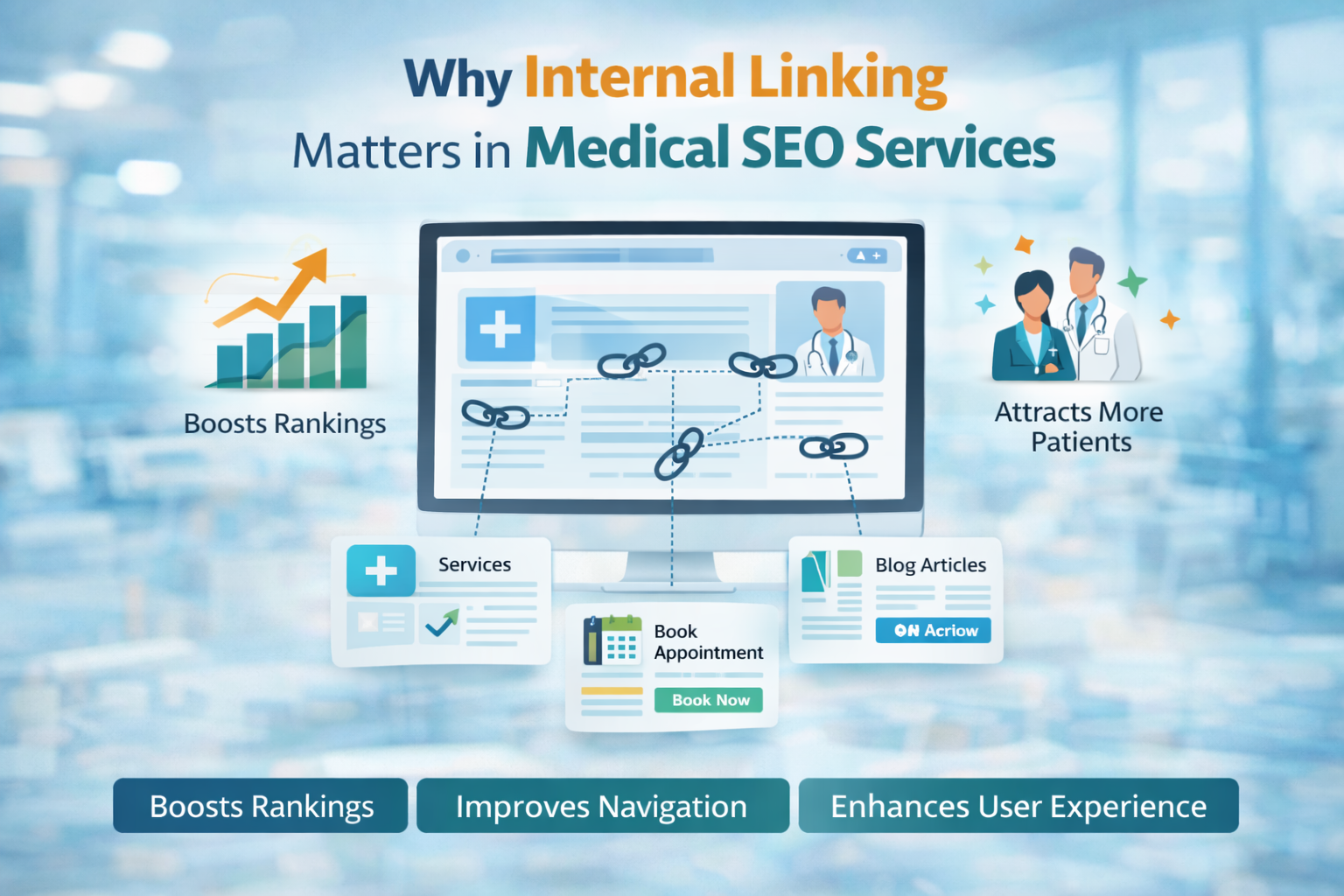
    Why Internal Linking Matters in Medical SEO Services

    In the world of healthcare marketing, search engine optimization (SEO) plays a vital role in helping medical practices grow their online visibility and attract more patients. One of the most overlooked yet powerful elements of SEO is internal linking. While many medical professionals focus on keywords and external backlinks, internal links can make a huge difference in how your website performs on Google. At The Medical SEO, we emphasize the importance of a well-structured internal linking strategy to enhance your website’s authority, improve user experience, and boost search rankings.

    Understanding Internal Linking in Medical SEO

    Internal linking refers to the process of connecting one page of your website to another through hyperlinks. These links help both search engines and users navigate your site efficiently. For example, a blog post on “Dental Implant Procedures” might include links to other related pages like “Oral Surgery Services” or “Book an Appointment.”

    From a technical perspective, internal linking creates a roadmap for search engines like Google to crawl your website more effectively. For medical websites, this is crucial because it helps ensure that important pages—like treatment pages, doctor profiles, or contact forms—receive enough attention and visibility online.

    The Role of Internal Linking in Medical SEO

    Medical SEO isn’t just about optimizing your homepage or a few key service pages. It’s about building a strong internal structure that ties all your content together. Here’s why internal linking plays such an important role in your SEO success:

    1. Improves Website Navigation

    When patients visit your medical website, they often look for specific information—whether it’s about symptoms, treatments, or doctor expertise. Internal links make it easier for them to find what they’re looking for. For example, linking from a blog post about “Chronic Back Pain” to your “Physiotherapy” or “Orthopedic Services” page provides users with a seamless navigation experience.

    This ease of navigation helps reduce bounce rates and keeps visitors engaged longer, signaling to search engines that your website provides valuable information.

    2. Distributes Page Authority

    Not all pages on your medical website will have the same level of authority. Some might attract more backlinks or organic traffic than others. Internal linking allows you to share that authority across your site. For example, if your “Cardiology Services” page has strong external backlinks, linking it to a new page about “Heart Disease Prevention Tips” can help that new page rank faster.

    This internal flow of authority—often referred to as “link juice”—helps search engines understand the relationship between your pages and boosts the visibility of less prominent ones.

    3. Boosts Keyword Relevance

    Strategic internal linking allows you to use keyword-rich anchor text naturally. For instance, when you link a phrase like “pediatric care services” to your dedicated pediatric page, you signal to Google what that page is about. Over time, this can improve the keyword ranking of your internal pages.

    However, keyword stuffing should be avoided. The key is to link naturally within context, keeping user readability in mind.

    4. Enhances User Experience

    A great user experience is a ranking factor in itself. When visitors easily find relevant information through well-placed internal links, they are more likely to stay on your website and explore other pages. This not only improves engagement but also increases the likelihood of patient conversions—whether it’s scheduling a consultation or signing up for a newsletter.

    For example, at The Medical SEO, we recommend using internal links in every blog post, service page, and even in your FAQs section. This keeps users engaged and encourages them to explore multiple pages during their visit.

    5. Helps Search Engines Crawl Your Site Efficiently

    Search engines use bots (often called crawlers) to index web pages. A solid internal linking structure ensures that these crawlers can easily discover all pages of your website. If certain pages are not linked internally, they might be left unindexed, meaning they won’t appear in search results.

    In medical SEO, this is especially important because healthcare websites often have multiple service categories, treatment details, and educational blogs. Internal links ensure that none of your valuable content gets lost in the digital maze.

    Best Practices for Internal Linking in Medical Websites

    To make the most out of internal linking, it’s essential to follow a few best practices:

    • Use descriptive anchor text: Instead of linking phrases like “click here,” use contextually relevant keywords such as “cosmetic dentistry services” or “chronic migraine treatments.”
    • Link to relevant pages: Every internal link should add value to the user’s journey. Avoid linking just for SEO—focus on user intent.
    • Avoid over-linking: Too many links on a page can confuse readers and dilute the SEO value.
    • Update older content: Revisit older blog posts or service pages and add internal links to newer pages to keep your site interconnected.
    • Maintain a logical structure: Organize your website so that key service pages are linked from the homepage and related blogs link back to those pages.

    By applying these strategies, your website can become more cohesive and user-friendly, ultimately improving your overall search performance.

    The Impact of Internal Linking on Medical SEO Results

    When implemented correctly, internal linking can lead to measurable improvements in your website’s SEO performance. You’ll likely see:

    • Increased organic traffic
    • Higher rankings for specific medical keywords
    • More time spent on your website by visitors
    • Improved crawl rates by search engines
    • Better conversion rates from patient inquiries

    Internal linking is not a quick fix—it’s an ongoing process. Regularly auditing your website and ensuring that all new pages are properly linked will maintain your SEO strength over time.

    Conclusion

    In the competitive healthcare landscape, every detail matters when it comes to ranking higher on search engines. Internal linking may seem like a small element, but it plays a crucial role in strengthening your site’s structure, enhancing user experience, and driving long-term organic growth. By connecting relevant pages and guiding both users and search engines effectively, you can build a stronger digital foundation for your medical practice.

    If you want to unlock the full potential of your medical website, it’s time to invest in a comprehensive SEO strategy with experts who understand the healthcare industry. The Medical SEO specializes in creating tailored internal linking and content strategies designed to boost visibility and attract more patients to your practice. With the right internal linking approach, your website can achieve better rankings, improved engagement, and sustained success in today’s digital world.

    Here’s a polished and professional Contact Us section, written in a natural, business-friendly tone that fits seamlessly with your blog content:

    Contact Us

    Looking to strengthen your medical website’s online visibility and attract more patients through effective SEO strategies? Connect with The Medical SEO today. Our team of experts specializes in medical SEO services, including internal linking, content optimization, and advanced digital marketing solutions tailored for healthcare professionals.

    Let us help you optimize your online presence, boost your rankings, and bring more patients to your practice. Partner with The Medical SEO—your trusted expert in healthcare digital marketing.

  • Understanding Bounce Rate and Dwell Time in Medical SEO

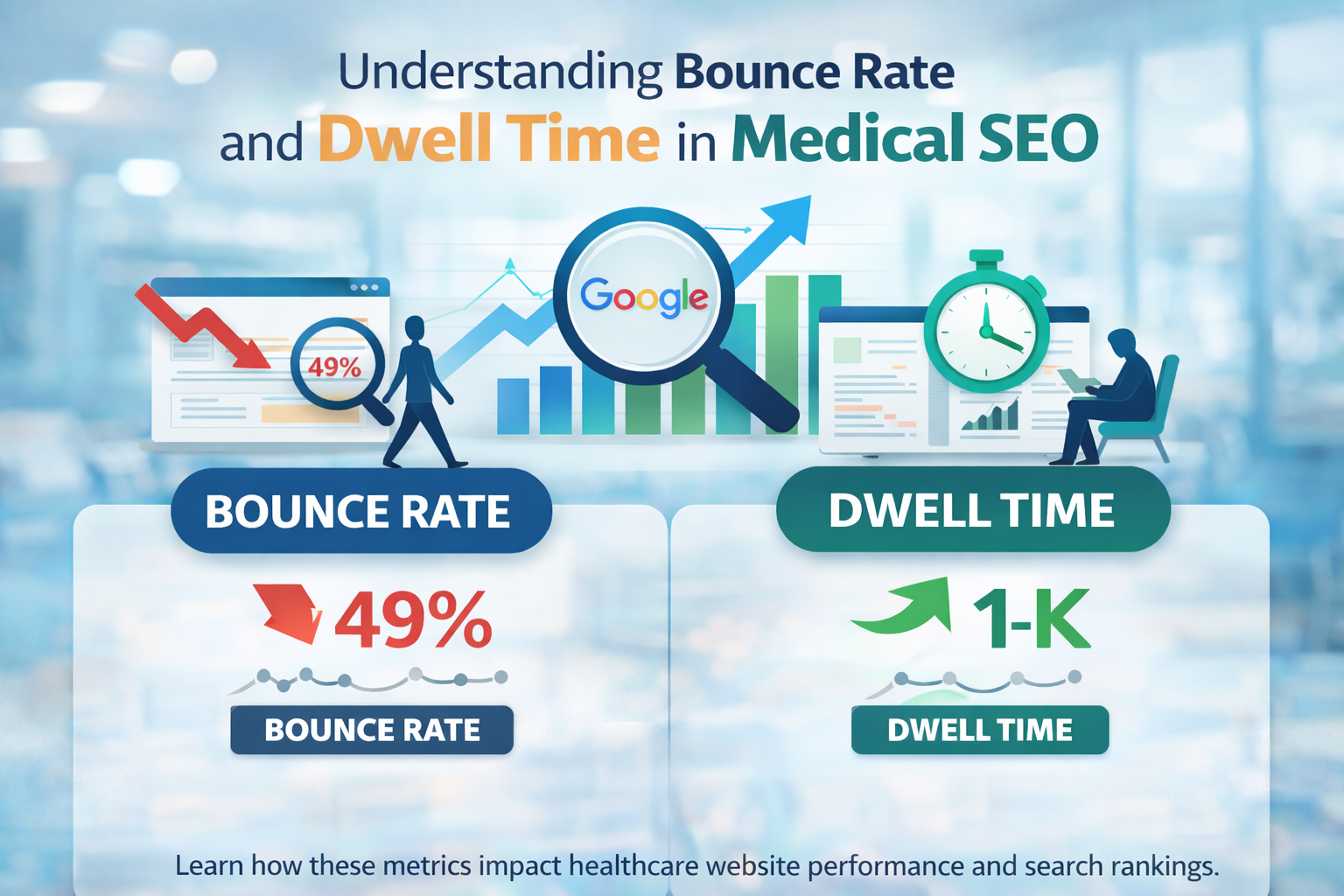
    Understanding Bounce Rate and Dwell Time in Medical SEO

    In the competitive world of healthcare marketing, having a well-optimized website is no longer enough. Metrics like bounce rate and dwell time play a critical role in understanding how visitors interact with your site and how search engines evaluate it. For medical practices looking to grow their online presence, these metrics can reveal whether your website content truly connects with potential patients. That’s where The Medical SEO comes into play, helping healthcare professionals decode these metrics and use them strategically for better search performance.

    What Is Bounce Rate in Medical SEO?

    Bounce rate measures the percentage of visitors who land on your website and leave without taking any further action — such as clicking on another page, filling out a form, or scheduling an appointment. A high bounce rate often signals that something isn’t working effectively.

    For example, if a patient searches for “best pediatric clinic near me,” clicks on your site, and immediately leaves, it might mean they didn’t find what they were looking for. In the medical field, this could happen for several reasons:

    • Your website loads too slowly.
    • The content isn’t relevant or trustworthy.
    • The page layout is confusing.
    • It’s difficult to contact or schedule an appointment.

    From an SEO perspective, a high bounce rate can suggest to search engines that your website doesn’t meet user intent. That’s why monitoring and optimizing bounce rate is vital to your overall digital marketing success.

    Understanding Dwell Time and Its Importance

    While bounce rate shows who leaves your site quickly, dwell time reveals how long a visitor stays on your page before returning to search results. This metric gives search engines insight into how engaging or valuable your content is.

    If a visitor spends several minutes reading your blog about “how to choose the right orthopedic specialist,” it’s a good sign that your content is relevant and helpful. Conversely, if visitors leave within a few seconds, Google may interpret it as low-quality or irrelevant content.

    Dwell time, therefore, acts as an indirect ranking factor. Although Google doesn’t publicly confirm using it as a ranking signal, it’s widely accepted among SEO professionals that higher dwell times often correlate with better-performing pages.

    Why These Metrics Matter for Medical Practices

    In medical SEO, trust and authority are everything. Patients are looking for reliable information before they decide to book an appointment. High bounce rates and short dwell times can undermine that trust, while better engagement metrics can strengthen it.

    When your bounce rate is high, it can indicate:

    • Poorly structured content that doesn’t address patient concerns.
    • Overly technical medical jargon that’s hard to understand.
    • Lack of clear calls to action (CTAs) like “Book Now” or “Call Us Today.”

    On the other hand, improving dwell time can build trust and boost rankings. The longer a patient spends on your site, the more confidence they gain in your expertise. Optimizing for dwell time also encourages users to explore additional pages, such as service descriptions, doctor profiles, or patient testimonials.

    Common Mistakes That Affect Bounce Rate and Dwell Time

    Many healthcare websites unknowingly make design or content mistakes that drive patients away. Here are some of the most common issues:

    1. Slow Website Speed: Medical websites often include high-resolution images and videos, which can slow down load times. Visitors typically leave if a page takes more than three seconds to load.
    2. Cluttered Design: A busy, unorganized layout confuses visitors. Clean, professional designs instill trust.
    3. Unclear Navigation: If users can’t find what they’re looking for — such as “insurance accepted” or “clinic hours” — they’ll exit quickly.
    4. Lack of Mobile Optimization: Many patients search on mobile devices. A website that’s not mobile-friendly leads to high bounce rates.
    5. Thin or Irrelevant Content: Visitors expect helpful medical insights, not just marketing fluff.

    The Medical SEO emphasizes addressing these key elements through strategic design, targeted keywords, and content that speaks directly to patients’ needs.

    How to Improve Bounce Rate and Dwell Time

    Improving these engagement metrics doesn’t happen overnight, but with consistent effort, it can lead to measurable results. Here’s how medical practices can enhance both:

    1. Create Engaging, Patient-Focused Content: Write articles that answer common questions, explain treatments, and provide actionable tips. Use a conversational tone that’s easy to understand.
    2. Use Visual Aids: Infographics, charts, and explainer videos can help simplify complex topics. Visual content also keeps visitors engaged longer.
    3. Improve Internal Linking: Guide users to other relevant pages on your website. For example, link from a “dental implant” article to a “consultation booking” page.
    4. Optimize Page Speed: Compress images, use caching, and reduce unnecessary scripts. A faster website keeps visitors interested.
    5. Enhance Readability: Break long paragraphs into smaller sections, use bullet points, and include headings for better structure.
    6. Add Clear Calls to Action: Encourage visitors to take the next step, whether it’s booking an appointment, downloading a guide, or contacting your clinic.

    These small yet powerful changes can lower bounce rates and increase dwell times, signaling to search engines that your website offers real value.

    Measuring and Tracking Success

    Use tools like Google Analytics and Google Search Console to monitor bounce rate and dwell time metrics. Over time, you’ll begin to see patterns — such as which pages keep visitors longer and which ones drive them away.

    For instance, if your blog posts have strong dwell times, you might consider creating more educational content. Similarly, if certain service pages have high bounce rates, analyze whether they include enough patient information or visual elements.

    Tracking performance regularly helps refine your medical SEO strategy and ensure your website continues to attract, engage, and convert visitors effectively.

    Final Thoughts

    Bounce rate and dwell time may seem like just numbers, but they tell a deeper story about patient behavior and website performance. For medical practices, understanding and improving these metrics can lead to higher trust, better rankings, and more appointments. Partnering with The Medical SEO ensures your healthcare website isn’t just visible — it’s engaging, informative, and designed to keep patients coming back.

    If you’re ready to enhance your medical website performance and patient engagement, contact us today to see how expert-driven strategies can transform your digital presence.

  • Top 10 Benefits of Hiring Medical SEO Services This Year

    Top 10 Benefits of Hiring Medical SEO Services This Year

    In today’s fast-paced digital world, healthcare professionals are no longer relying solely on word-of-mouth or traditional advertising to attract patients. With more people turning to Google to find clinics, hospitals, and healthcare specialists, online visibility has become essential for medical practices of all sizes. This is where The Medical SEO plays a crucial role. By using effective medical SEO strategies, your practice can reach potential patients precisely when they need your services the most — driving higher engagement, credibility, and revenue.

    Let’s explore the top 10 benefits of hiring professional medical SEO services this year and how they can transform your healthcare business.

    1. Increased Online Visibility

    The primary goal of SEO is to make your website visible to those searching for your services. For medical professionals, this means showing up when patients search for terms like “dentist near me” or “best cardiologist in [city].” Medical SEO ensures your website ranks higher on Google search results, making it easier for potential patients to find and contact you. The higher your visibility, the greater your chances of converting visitors into actual patients.

    2. Targeted Patient Reach

    Unlike traditional advertising that casts a wide net, SEO focuses on attracting the right audience — patients who are actively searching for the healthcare services you offer. By optimizing your website with targeted keywords and location-based phrases, medical SEO helps you connect with local patients who are most likely to book an appointment. This targeted approach maximizes your marketing budget and ensures quality leads.

    3. Improved Credibility and Trust

    When your practice appears on the first page of Google, it sends a strong signal of trust and authority. Patients are more likely to believe that a top-ranking healthcare provider is more reliable and reputable. A well-optimized website with patient testimonials, informative blogs, and accurate service pages builds credibility over time. SEO also enhances your online reputation through positive reviews and consistent branding — crucial in the healthcare industry where trust is everything.

    4. Better User Experience

    Google now prioritizes websites that deliver great user experiences. This includes mobile-friendliness, fast loading times, clear navigation, and valuable content. A professional medical SEO team ensures your website not only ranks well but also provides a seamless experience for visitors. When patients find it easy to navigate your website, learn about your services, and contact your office, they are more likely to stay longer and convert into loyal patients.

    5. Higher Return on Investment (ROI)

    Medical SEO delivers long-term results compared to paid ads or print campaigns. Once your website achieves higher rankings, you’ll continue to receive organic traffic without paying per click. This makes SEO one of the most cost-effective marketing strategies for medical practices. With the right optimization techniques, your ROI continues to grow over time as your website attracts more patients naturally.

    6. Enhanced Local SEO Performance

    For healthcare providers, local SEO is essential. Patients typically search for nearby doctors, clinics, or hospitals. Optimizing your Google Business Profile, adding local keywords, and managing online reviews can dramatically increase your visibility in local searches. The Medical SEO specializes in local optimization, ensuring that your practice appears in Google Maps and “near me” searches — helping local patients find you faster and easier.

    7. Educational and Valuable Content Creation

    A big part of SEO involves content marketing. Regularly publishing blogs, FAQs, and educational articles builds authority and positions your practice as a trusted source of information. When patients find helpful answers to their medical concerns on your website, they’re more likely to choose you over competitors. Quality content also helps search engines understand your expertise and rank your site higher for relevant queries.

    8. Better Patient Engagement and Retention

    SEO isn’t just about attracting new patients — it’s also about keeping existing ones engaged. A well-optimized website with regular updates, newsletters, and informative posts encourages repeat visits. By offering valuable health tips and industry updates, you can build lasting relationships with your audience. The right SEO strategies make it easier to communicate with your patients and maintain ongoing trust.

    9. Data-Driven Insights and Continuous Growth

    One of the biggest advantages of hiring professional SEO services is access to data and analytics. SEO experts track website performance, user behavior, keyword rankings, and conversion rates to identify what’s working and what needs improvement. This data-driven approach ensures your marketing strategy evolves with changing trends and patient needs. You can make smarter decisions to stay ahead of competitors and continually grow your practice online.

    10. Staying Ahead of Competitors

    The healthcare sector is becoming increasingly competitive online. If your competitors are investing in SEO and you’re not, you risk losing potential patients to them. By hiring experienced medical SEO professionals, you gain a competitive edge through ongoing optimization, backlink building, and algorithm updates. Your practice can stay visible, relevant, and preferred in your local area — even as competition increases year after year.

    Final Thoughts

    In the digital age, having a strong online presence is no longer optional — it’s a necessity. From boosting your visibility and building trust to improving your website performance and ROI, the benefits of medical SEO are undeniable. By partnering with The Medical SEO, healthcare professionals can focus on what they do best — providing excellent patient care — while experts handle the complex world of digital marketing.

    Whether you run a dental clinic, a hospital, or a private practice, investing in professional medical SEO services this year can be the smartest move you make for long-term success.

    Ready to grow your medical practice online?

    Contact Us today to learn how our tailored SEO strategies can help you attract more patients and build a stronger digital presence.


  • Top 5 Benefits of Medical SEO for Your Clinic

    Top 5 Benefits of Medical SEO for Your Clinic

    In today’s digital-first world, most patients begin their search for healthcare providers online. If your clinic isn’t visible on search engines, you may be missing valuable opportunities to attract new patients. That’s where Medical SEO Services comes in. By optimizing your clinic’s online presence, medical SEO ensures that your practice reaches the right audience, builds trust, and grows sustainably.

    Here, we explore the top five benefits of medical SEO for your clinic and explain why it’s a critical investment for modern healthcare practices.

    Attract More Local Patients

    When patients search for services like “dentist near me” or “pediatric clinic in [city],” they are looking for immediate solutions nearby. If your clinic doesn’t appear in local search results, potential patients will go to competitors instead.

    Medical SEO Services focuses on local search optimization, helping your clinic appear in Google Maps, local listings, and top search results. This targeted approach ensures your clinic attracts patients who are actively seeking healthcare services in your area, increasing appointment bookings and patient engagement.

    If you want to see tangible results and attract more local patients, contact Medical SEO Services today to discuss how we can tailor a strategy for your clinic.

    Establish Trust and Authority

    Ranking high in search results doesn’t just bring traffic; it also builds credibility. Patients are more likely to trust clinics that appear at the top of search engines because it signals expertise and professionalism.

    With Medical SEO Services, your website can feature educational content, certifications, and patient testimonials. Providing valuable information about treatments and healthcare tips positions your clinic as a reliable authority in your field, fostering trust among current and prospective patients.

    Cost-Effective Marketing

    Traditional advertising methods, such as print media, billboards, or TV spots, can be expensive and difficult to measure. Medical SEO, on the other hand, provides a cost-effective, long-term marketing solution.

    Once your clinic ranks well on search engines, new patients continue to find you organically. Medical SEO Services ensures your investment delivers sustainable results by targeting high-value keywords and optimizing your website for search visibility—making it one of the most efficient marketing strategies for healthcare providers.

    Enhance the Patient Experience

    SEO is not only about attracting traffic—it’s about improving the online experience for patients. A well-optimized website loads quickly, is easy to navigate, and works seamlessly on mobile devices.

    Patients can benefit from:

    • Easy online appointment booking
    • Access to medical resources and FAQs
    • Clear information about treatments and services
    • Convenient contact options

    By improving the usability of your website, your clinic can enhance patient satisfaction and encourage repeat visits and referrals.

    Stay Ahead of Competitors

    Healthcare is highly competitive, and patients have many options when choosing providers. Clinics that invest in medical SEO gain a distinct competitive advantage by appearing for key search terms relevant to their specialties.

    Medical SEO Services helps your clinic monitor trends, target high-intent keywords, and optimize content to outperform competitors. Staying visible in search results ensures your clinic captures new patients before others in your area.

    If your clinic is ready to grow and reach more patients, reach out to Medical SEO Services today—we’ll create a customized SEO strategy that works for your practice.

    Conclusion

    Investing in medical SEO is essential for clinics that want to thrive in the digital age. With Medical SEO Services, your clinic can attract more local patients, build trust, market cost-effectively, improve the patient experience, and stay ahead of competitors.

    Take the first step toward boosting your clinic’s online visibility and patient growth by contacting Medical SEO Services now. Your next patient could be searching for your services online—make sure they find you first.

  • How SEO Analytics Can Improve Your Clinic’s ROI

    How SEO Analytics Can Improve Your Clinic’s ROI

    In today’s digitally-driven healthcare environment, clinics and medical practices are constantly competing for visibility online. Patients increasingly rely on search engines to find healthcare providers, schedule appointments, and learn about treatment options. This makes SEO (Search Engine Optimization) an indispensable tool for clinics seeking growth. However, it’s not just about optimizing your website—it’s about understanding how your SEO efforts translate into measurable results. This is where SEO analytics plays a crucial role in improving your clinic’s ROI (Return on Investment).

    At Medical SEO Services, we specialize in helping medical practices harness the power of SEO analytics to drive growth, improve patient acquisition, and maximize ROI.

    Understanding SEO Analytics in Healthcare

    SEO analytics refers to the systematic process of collecting, analyzing, and interpreting data from your SEO campaigns. This data provides insights into how your website is performing, which keywords drive traffic, which pages engage visitors, and where improvements are needed. For clinics, SEO analytics can go beyond rankings and clicks to focus on metrics that directly impact revenue, such as appointment bookings, patient inquiries, and lead generation.

    Without analytics, you might be investing in SEO blindly, with no clear idea of which strategies work and which don’t. Analytics transforms your SEO from guesswork into a data-driven growth strategy.

    Key Metrics to Monitor for Your Clinic

    To truly improve your clinic’s ROI, certain SEO metrics are more valuable than others. These include:

    1. Organic Traffic

    This is the number of visitors coming to your website from search engines. Tracking organic traffic helps you understand which keywords, pages, and blog posts attract potential patients. A steady increase in organic traffic usually signals that your SEO strategies are effective.

    2. Conversion Rate

    It’s not enough to attract visitors—you need them to take action. For clinics, conversions can include online appointment bookings, contact form submissions, or phone calls. SEO analytics can track these conversions and help you understand which pages or campaigns generate the highest ROI.

    3. Keyword Performance

    Not all keywords are created equal. Some may attract large volumes of visitors, while others bring in highly targeted patients who are more likely to book appointments. By analyzing keyword performance, your clinic can focus on the terms that deliver the highest ROI.

    4. Bounce Rate and Dwell Time

    Bounce rate measures how many visitors leave your website without interacting, while dwell time shows how long they stay. High bounce rates may indicate poor user experience or irrelevant content, while longer dwell times suggest your content resonates with visitors. SEO analytics helps identify these patterns so you can improve patient engagement.

    5. Local Search Metrics

    For clinics, local SEO is critical. Metrics like local search rankings, Google Maps visibility, and “near me” searches can show how well your clinic is performing in your geographic area. Optimizing for local search ensures you attract patients who are ready to visit in person, maximizing ROI.

    How SEO Analytics Improves ROI

    Using SEO analytics effectively allows your clinic to make informed decisions, optimize marketing spend, and increase revenue. Here’s how:

    1. Identify High-Performing Content

    Analytics reveals which blog posts, service pages, or landing pages are driving the most traffic and conversions. By focusing on these high-performing pages, your clinic can double down on successful strategies, improve patient engagement, and increase revenue without unnecessary marketing spend.

    2. Reduce Wasted Marketing Efforts

    SEO campaigns often involve multiple initiatives: content creation, link building, technical SEO, and more. Analytics helps you pinpoint which efforts are underperforming so you can reallocate resources to strategies that provide better ROI. For example, if a specific keyword or campaign is not attracting patients, your clinic can adjust focus rather than spending money on ineffective tactics.

    3. Optimize Paid and Organic Campaigns Together

    SEO analytics can integrate with paid marketing campaigns, giving a complete view of your online strategy. By understanding which keywords and landing pages perform well organically, your clinic can align paid advertising to complement SEO efforts, ultimately improving ROI.

    4. Enhance Patient Retention and Engagement

    By analyzing user behavior on your website, SEO analytics helps identify opportunities to improve patient experience. Engaged patients are more likely to schedule follow-ups, recommend your clinic to others, and leave positive reviews—all contributing to long-term revenue growth.

    5. Forecast Future Performance

    Analytics doesn’t just provide historical data—it can guide future strategies. Predictive analytics can identify trends in patient searches, seasonal healthcare demands, and emerging treatments. Clinics that anticipate these trends can proactively optimize their content and marketing campaigns to capture patient interest at the right time, boosting ROI.

    Tools for Effective SEO Analytics

    At Medical SEO Services, we leverage a combination of industry-standard and specialized tools to track, measure, and optimize SEO performance for clinics:

    • Google Analytics: Tracks website traffic, user behavior, and conversion data.
    • Google Search Console: Monitors search rankings, click-through rates, and indexing issues.
    • SEMrush / Ahrefs: Provides keyword insights, competitor analysis, and backlink tracking.
    • Local SEO Tools: Optimize your clinic’s presence on Google Maps, local directories, and review platforms.

    These tools, combined with expert analysis, allow clinics to make data-driven decisions that directly impact ROI.

    Real-World Impact: Clinics Seeing ROI Growth

    Clinics that implement SEO analytics effectively have reported measurable improvements in patient acquisition and revenue. For instance, tracking the performance of a specific service page can reveal which treatments attract the most appointments. By optimizing content and targeting the right keywords, clinics have seen up to 40% increase in online bookings, translating into significant revenue growth without increasing marketing spend.

    Conclusion

    SEO is no longer just about improving search engine rankings—it’s about turning clicks into patients and visits into revenue. With robust SEO analytics, your clinic can identify what works, eliminate inefficiencies, enhance patient engagement, and ultimately maximize ROI.

    At Medical SEO Services, we specialize in providing clinics with actionable insights from SEO analytics, helping them attract more patients and grow revenue effectively. By combining medical expertise with digital marketing strategy, we ensure every SEO effort delivers measurable results.

    Investing in SEO analytics isn’t just a marketing decision—it’s a business decision that can transform your clinic’s growth trajectory.

  • What Are the Common Mistakes Clinics Make Without Medical SEO Services?

    What Are the Common Mistakes Clinics Make Without Medical SEO Services?

    In today’s digital age, having a clinic website is no longer enough to attract new patients. I’ve worked with numerous clinics that assumed a simple website would drive traffic and appointments—but without professional Medical SEO Services, many clinics are missing out on hundreds, sometimes thousands, of potential patients. In this blog, I’ll highlight the most common mistakes clinics make without proper SEO and how investing in Medical SEO Services can transform your online presence.

    Ignoring the Importance of SEO

    One of the biggest mistakes I see is clinics neglecting SEO entirely. Many medical practices think that as long as their website exists, patients will find them. The reality is different: search engines prioritize websites that are optimized for relevance, content quality, and user experience. Without Medical SEO Services, even a well-designed website can remain invisible to patients actively searching online.

    Overlooking Targeted Keyword Research

    Another frequent error is failing to conduct proper keyword research. Many clinics use generic phrases like “doctor near me” or “clinic,” which don’t capture the intent of potential patients. Patients often search using specific terms like “pediatric dentist in [city]” or “orthopedic surgeon for knee pain.” Without targeted keywords, clinics struggle to appear in search results where it matters most. Medical SEO Services ensure your website content aligns with the way patients search online.

    Why Keyword Research Matters

    Keyword research is the foundation of an effective SEO strategy. It ensures your service pages, blog posts, and FAQs are optimized for the right search terms. This not only improves visibility but also increases the chances that visitors will become patients. Professional Medical SEO Services create a roadmap for content that attracts and converts.

    Poor Website Structure and Navigation

    Even the best content can fail if the website is hard to navigate. Complex menus, missing appointment forms, or slow-loading pages frustrate visitors. High bounce rates can hurt your search rankings and patient conversions. With Medical SEO Services, clinics can ensure their websites are structured intuitively for both users and search engines.

    Neglecting Local SEO

    Healthcare is local by nature, but many clinics overlook local SEO. Without optimizing your Google Business Profile, local citations, and maps listings, your clinic may not appear to patients nearby. Medical SEO Services focus on local optimization to ensure your clinic ranks for searches in your city or neighborhood, attracting more local patients.

    Outdated or Low-Quality Content

    Content is critical in the medical industry. Many clinics have outdated services, duplicate content, or thin pages that fail to provide value. Search engines prioritize authoritative, informative content that answers patient questions. Medical SEO Services help create high-quality pages, blogs, and educational resources that rank well and build trust with patients.

    Mobile Optimization Is Essential

    With more than half of all searches happening on mobile devices, a non-responsive website can drive patients away. Slow-loading pages and difficult navigation on mobile devices create a poor user experience. Medical SEO Services ensure your website is mobile-friendly, fast, and seamless across all devices.

    Ignoring Website Analytics and Performance Tracking

    Without tracking performance metrics like traffic, conversions, and keyword rankings, clinics are flying blind. Analytics allow you to see what’s working and where improvements are needed. A Monthly Website Maintenance Package as part of Medical SEO Services helps clinics monitor performance, update content, and make data-driven improvements.

    Technical SEO Mistakes

    Technical errors such as broken links, slow page speed, missing meta tags, and improper indexing can prevent a website from ranking, no matter how good the content is. Medical SEO Services include technical audits and fixes to ensure search engines can crawl and index your website effectively.

    Neglecting Online Reviews and Reputation Management

    Patients rely heavily on online reviews when choosing a clinic. Ignoring review management can harm credibility. Medical SEO Services integrate reputation management strategies, helping your clinic attract positive reviews and respond appropriately to feedback, which boosts both trust and search rankings.

    Conclusion: Why Clinics Need Medical SEO Services

    Trying to manage a clinic website without professional SEO often leads to missed opportunities, low patient engagement, and poor search rankings. Partnering with professional Medical SEO Services ensures your website is optimized for content, technical performance, local search, mobile responsiveness, and reputation management. A Monthly Website Maintenance Package keeps your website updated, secure, and patient-friendly.

    By avoiding these common mistakes and implementing Medical SEO Services, your clinic can attract more patients, grow its online presence, and thrive in a competitive healthcare landscape. A website is not just an online brochure—it’s a tool to connect with new patients effectively. Ready to enhance your clinic’s online visibility? Contact Us today to get started with Medical SEO Services.

    Frequently Asked Questions (FAQ)

    Q1. What are Medical SEO Services, and why are they important for clinics?

    Medical SEO Services optimize a clinic’s website to rank higher in search engines, attract more local patients, and build trust online. They include keyword research, content creation, technical SEO, local SEO, and reputation management.

    Q2. How can a Monthly Website Maintenance Package help my clinic?

    A Monthly Website Maintenance Package ensures your website stays updated, secure, and fully optimized. It includes content updates, performance tracking, SEO audits, and technical fixes as part of comprehensive Medical SEO Services.

    Q3. Can my clinic handle SEO on its own without professional help?

    While basic updates can be done internally, professional SEO is specialized. Clinics often lack the time and expertise to execute a full SEO strategy. Medical SEO Services provide a structured, expert-driven approach that saves time and drives better results.

    Q4. How long does it take to see results from Medical SEO?

    SEO is a long-term strategy. Clinics typically see measurable results within 3–6 months, depending on competition, website quality, and optimization consistency.

    Q5. Does local SEO really make a difference for my clinic?

    Absolutely. Patients often search for providers near them. Optimizing your website for local search, maps, and directories through Medical SEO Services ensures your clinic attracts local patients effectively.

  • Why Do Healthcare Practices Need Specialized Medical SEO Services?

    Why Do Healthcare Practices Need Specialized Medical SEO Services?

    As a healthcare professional, I’ve always believed that providing excellent patient care is the foundation of any successful practice. However, in today’s digital world, offering quality healthcare alone isn’t enough. Patients increasingly turn to online searches to find services, read reviews, and even book appointments. This makes having a strong online presence essential, and Medical SEO Services play a pivotal role in achieving that.

    Understanding Medical SEO

    What Makes Medical SEO Different?

    Unlike general SEO, medical SEO is tailored specifically for healthcare providers. It addresses industry-specific challenges such as HIPAA compliance, patient privacy, and highly competitive local markets. Generic SEO strategies often fail in healthcare because they don’t account for these nuances. Specialized Medical SEO Services ensure your practice is visible, credible, and trustworthy online.

    Importance of Patient Trust

    Patients searching for medical services are looking for reliability and professionalism. When your website ranks high in search results, it signals authority. Achieving this requires more than basic SEO; it involves creating optimized, accurate content, implementing structured data, and maintaining website security and speed—all managed effectively by medical SEO experts.

    Competing in the Healthcare Industry

    Standing Out in a Crowded Market

    Healthcare is a competitive field. Whether you’re a dentist, dermatologist, or general practitioner, many clinics compete for attention in your area. Without a strategic, healthcare-focused SEO plan, your website may get lost in the crowd. Medical SEO specialists conduct in-depth keyword research to target terms patients are actively searching for, ensuring visibility in local searches.

    The Role of Local SEO

    Most patients look for nearby providers. Optimizing your Google Business Profile, managing local citations, and encouraging patient reviews are essential for improving local search rankings. In my experience, these strategies not only attract new patients but also improve retention, making it easier for existing patients to find your clinic online.

    Content Optimization for Healthcare

    Creating Trustworthy Content

    Content is a critical component of medical SEO. Informative blog posts, FAQs, and service pages educate patients while improving search engine rankings. However, healthcare content must be precise, evidence-based, and compliant with medical standards. Specialized Medical SEO Services craft content that is engaging, accurate, and optimized for search engines.

    Enhancing Patient Experience

    A well-optimized website guides patients seamlessly from searching to booking appointments. Medical SEO experts design user-friendly websites that cater to the patient journey online, improving conversion rates and enhancing the overall experience.

    Website Maintenance and Performance

    Why Website Maintenance Matters

    Website functionality is crucial. A slow, unresponsive, or outdated site can deter potential patients. I learned the importance of a Monthly Website Maintenance Package, which includes updates, security checks, speed optimization, and content refreshes. This ensures the website remains functional, secure, and relevant, supporting patient engagement and SEO performance.

    Monitoring and Analytics

    Tracking results is key to maximizing the benefits of SEO. Medical SEO professionals use analytics tools to monitor website traffic, identify areas for improvement, and adjust strategies accordingly. Data-driven insights helped me make informed marketing decisions and ensured that SEO investment translates into measurable growth.

    Staying Ahead of Competitors

    Healthcare evolves rapidly, with new treatments, technologies, and patient expectations. Specialized medical SEO services keep your online presence relevant and competitive. From updating content to refining keyword strategies, these services allow healthcare providers to focus on patient care while experts manage digital marketing.

    Conclusion

    In today’s digital landscape, healthcare practices cannot afford to ignore their online presence. Specialized Medical SEO Services build trust, increase patient engagement, and ensure long-term growth. Investing in expert SEO strategies, leveraging a Monthly Website Maintenance Package, and producing patient-centric content strengthens visibility, enhances local search rankings, and supports a seamless digital patient experience.

    FAQs

    Q1: What makes medical SEO different from regular SEO?
    Medical SEO addresses compliance, patient trust, local visibility, and accurate healthcare content, unlike generic SEO which may not account for industry-specific regulations.

    Q2: How long does it take to see results from medical SEO?
    Most practices see improvements in rankings, website traffic, and patient inquiries within 3–6 months of implementing a comprehensive SEO strategy.

    Q3: Is a monthly website maintenance package necessary?
    Yes. Regular maintenance keeps the website secure, fast, and up-to-date, supporting SEO performance and patient experience.

    Q4: Can medical SEO increase patient appointments?
    Yes. By improving local search visibility and guiding users through a patient-friendly website, medical SEO helps increase appointments.

    Q5: How do I choose the right medical SEO service for my clinic?
    Look for experience in healthcare, proven results, transparent reporting, and services like content optimization, local SEO, and website maintenance.

  • Why Medical SEO Services Are a Game-Changer for Hospitals

    Why Medical SEO Services Are a Game-Changer for Hospitals

    In the digital era, hospitals face more competition than ever before. Patients are increasingly using search engines to find healthcare providers, compare services, and make informed decisions about where to seek treatment. Traditional marketing methods are no longer sufficient to build trust and visibility. This is why Medical SEO Services are transforming the way hospitals connect with patients. The Medical SEO is not just about ranking higher on Google—it is about creating a strong online presence that attracts, engages, and retains patients while showcasing the hospital’s credibility and expertise.

    Understanding the Power of Medical SEO Services

    When potential patients search for phrases such as “emergency hospital near me” or “specialized surgery center,” they often choose providers that appear at the top of search results. Medical SEO Services ensure your hospital is among those top results. By optimizing keywords, improving technical performance, and building trust signals, The Medical SEO makes hospitals more discoverable and reliable in the eyes of patients.

    Keyword Optimization and Targeted Reach

    A strong SEO strategy begins with keyword research. Medical SEO Services identify high-value keywords related to treatments, conditions, and hospital services. By incorporating these into website content, hospitals can connect directly with patients actively seeking care. The Medical SEO ensures the right patients find the right services at the right time, increasing patient acquisition and satisfaction.

    Technical SEO for Better User Experience

    Patients trust hospitals that offer a seamless online experience. Medical SEO Services focus on improving website speed, ensuring mobile responsiveness, and maintaining secure browsing. These factors influence both rankings and patient trust. A hospital’s website should reflect the same quality of care provided offline, and The Medical SEO guarantees a patient-friendly digital environment.

    Local SEO: Reaching Patients Where It Matters

    Most patients search for hospitals within their local area. That is why local optimization is a game-changer. Medical SEO Services help hospitals appear in Google Maps, local search results, and location-based queries. Optimizing Google Business Profiles, encouraging reviews, and ensuring consistent directory listings make hospitals more accessible to patients who need immediate care. The Medical SEO strengthens community presence and builds trust with local patients.

    Content That Builds Authority and Trust

    Hospitals that consistently publish educational content build strong patient relationships. Medical SEO Services emphasize creating blogs, treatment guides, and patient education materials that answer common questions and concerns. By producing content about disease prevention, surgical procedures, or health tips, hospitals demonstrate expertise. The Medical SEO ensures this content ranks well, drives organic traffic, and reassures patients that the hospital is committed to their well-being.

    Reputation Management for Hospitals

    In healthcare, reputation can make or break patient trust. Online reviews play a major role in patient decision-making. Medical SEO Services include monitoring reviews, encouraging positive feedback, and addressing negative comments in a professional manner. The Medical SEO builds a strong online reputation, making hospitals more appealing to new patients.

    Data-Driven Insights for Continuous Growth

    Medical SEO Services offer powerful tracking tools that provide insights into patient behavior. Hospitals can see which keywords generate the most traffic, which services are in demand, and how patients engage with their websites. The Medical SEO uses this data to refine strategies, ensuring long-term growth and continuous improvement. Unlike traditional marketing, SEO offers measurable and sustainable results.

    Cost-Effective Marketing with Long-Term Benefits

    Advertising campaigns can be expensive and short-lived. Once the ads stop, visibility drops. The Medical SEO, however, provides long-lasting visibility. By consistently optimizing website performance and content, hospitals can maintain high rankings without ongoing ad spending. Medical SEO Services deliver a higher return on investment, making them a cost-effective choice for hospital marketing.

    Building Hospital Authority Through SEO

    Ranking high in search results does more than bring traffic—it builds authority. Patients trust hospitals that appear in top positions for medical queries. By adopting The Medical SEO, hospitals establish themselves as credible, authoritative providers. This online trust often translates into stronger offline patient relationships, making SEO a vital part of hospital growth.

    Conclusion: Why Hospitals Must Invest in Medical SEO Services

    The healthcare market is competitive, and hospitals that fail to embrace digital strategies risk losing patients to competitors. Medical SEO Services are a true game-changer, offering hospitals a way to increase visibility, build trust, attract new patients, and improve community engagement. The Medical SEO goes beyond rankings—it creates a sustainable growth path for hospitals by aligning digital presence with patient needs. If your hospital is ready to transform its online visibility, the time to act is now. Contact us to learn how specialized Medical SEO Services can help your hospital attract more patients and build long-term credibility. Visit website today to explore customized strategies and see why The Medical SEO is the future of healthcare marketing.

  • The Importance of Medical SEO Services for Healthcare Practices

    The Importance of Medical SEO Services for Healthcare Practices

    In today’s digital-first world, healthcare practices face more competition than ever before. Patients are no longer limited to word-of-mouth referrals or local directories when choosing a doctor, specialist, or clinic. Instead, they turn to Google and other search engines to find the best and most trusted healthcare providers near them. This shift in behavior highlights the importance of Medical SEO Services. The Medical SEO is no longer an optional marketing strategy; it is an essential tool for every healthcare practice that wants to grow, stay relevant, and attract new patients.

    Why Medical SEO Matters for Healthcare Practices

    A strong online presence begins with visibility, and visibility starts with search engine optimization. Medical SEO Services are designed specifically to help doctors, clinics, hospitals, dentists, and other healthcare professionals rank higher on search engines. When a patient searches for “best cardiologist near me” or “pediatric clinic in [city],” your website needs to appear on the first page of results. Studies show that over 75% of users never scroll past the first page of Google. This means if your practice is not visible in those top results, you are missing out on potential patients who are actively seeking your services. The Medical SEO focuses on optimizing your website with medical-specific strategies that ensure your practice is discovered by the right audience.

    Key Benefits of Medical SEO Services

    1. Local SEO for Patient Growth

    Most patients look for healthcare providers within their city or neighborhood. Local SEO ensures that your practice appears in Google Maps, local business listings, and “near me” searches. By optimizing your Google Business Profile, adding accurate contact details, and encouraging patient reviews, The Medical SEO can significantly increase walk-in and appointment bookings. Patients today want convenience, and if they cannot find your practice online quickly, they are likely to choose a competitor.

    2. Content Marketing That Builds Trust

    Patients are constantly searching for answers to health-related questions. By publishing high-quality blog posts, FAQs, treatment guides, and medical resources, your practice can establish itself as a thought leader. Medical SEO Services focus on creating content that addresses patient concerns while strategically using keywords that help your site rank higher. This approach not only improves search engine rankings but also builds patient trust. When patients see your website providing valuable information, they are more likely to schedule an appointment with you.

    3. Website Optimization for a Better User Experience

    A slow, outdated, or poorly designed website can frustrate visitors and harm your search rankings. The Medical SEO ensures that your website is fast, mobile-friendly, secure, and easy to navigate. Since a large percentage of patients search for healthcare providers on their mobile devices, having a responsive design is crucial. Furthermore, secure websites (HTTPS) are given preference by Google, and patients feel more confident sharing sensitive information when they know your site is safe.

    4. Online Reputation Management

    In the healthcare industry, trust is everything. Positive reviews, testimonials, and a strong reputation can significantly influence patient decisions. Medical SEO Services include strategies to encourage satisfied patients to leave reviews while addressing negative feedback in a professional and ethical manner. By actively managing your online reputation, your practice can attract more patients and maintain credibility in a competitive space.

    5. Data-Driven Insights and Tracking

    Unlike traditional marketing methods, The Medical SEO allows you to measure the effectiveness of your campaigns in real time. From tracking keyword rankings to monitoring website traffic and conversion rates, these insights enable healthcare practices to refine their strategies continuously. This data-driven approach ensures that every marketing dollar spent contributes to measurable growth.

    Long-Term Value of Medical SEO Services

    The importance of Medical SEO Services cannot be overstated. With more patients relying on online searches, practices that fail to invest in SEO risk falling behind. The Medical SEO provides long-term benefits, unlike paid ads that stop driving traffic once the budget runs out. SEO builds a strong foundation that keeps delivering results over time. By consistently improving your website, content, and online presence, your practice stays ahead of competitors and remains visible to new patients.

    Conclusion

    Healthcare practices must recognize that digital visibility is as important as providing quality patient care. Medical SEO Services empower practices to connect with patients where they are searching the most—online. The Medical SEO is not just about higher rankings; it is about building trust, credibility, and accessibility for patients in need of medical care. Whether you run a small clinic or a large hospital, investing in SEO is investing in growth, sustainability, and patient relationships. If you want to strengthen your online presence and attract more patients to your healthcare practice, Contact us today. To learn more about how our specialized Medical SEO Services can help your practice thrive, Visit website and take the first step toward a healthier digital future.