

The Future of Medical SEO in AI Search
Jun 30, 2026


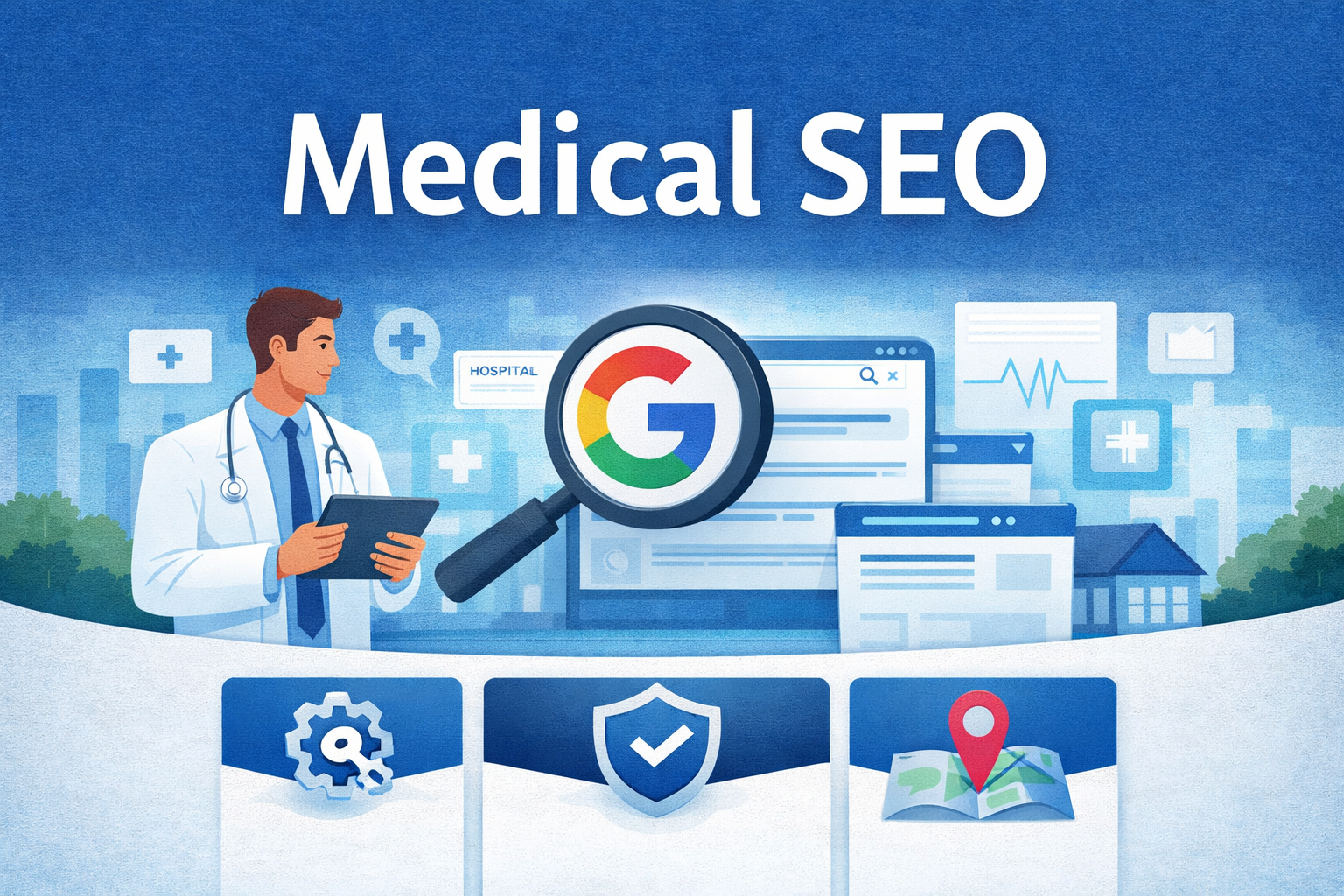
In an era where “Dr. Google” is often the first point of contact for patients, the digital landscape for healthcare providers has shifted from a luxury to a necessity. Whether you are a solo practitioner, a specialized clinic, or a large-scale health system, your online presence determines your patient volume. However, simply having a website is no longer enough. To truly scale, you need a strategic approach that combines clinical authority with digital visibility.
This is where a robust framework comes into play. By focusing on content-led growth, healthcare brands can build trust before a patient even steps into the waiting room. Implementing a specialized strategy, such as those offered by The Medical SEO, ensures that your expertise is translated into a language that both patients and search engines understand.
Traditional advertising—billboards, radio spots, and print—is interruptive. Healthcare, however, is deeply personal and intent-driven. When someone searches for “chronic back pain treatments” or “best pediatrician near me,” they aren’t looking for a catchy jingle; they are looking for answers and empathy.
Content-led growth focuses on providing value first. By creating educational, high-quality content, you position your practice as a thought leader. In the eyes of Google, this builds E-E-A-T (Experience, Expertise, Authoritativeness, and Trustworthiness), which is the gold standard for Your Money or Your Life (YMYL) websites like those in the medical niche.
The Power of the “Patient Journey”
Every patient goes through a specific journey:
A successful The Medical SEO strategy maps content to each of these stages, ensuring your brand is present at every touchpoint.
To achieve sustainable growth, your SEO strategy should be built on three foundational pillars: Technical Excellence, Authoritative Content, and Patient-Centric Experience.
Before you can rank, your “digital house” must be in order. This includes mobile responsiveness, fast loading speeds, and secure HTTPS protocols. In healthcare, technical SEO also involves schema markup. Using MedicalEntity or Physician schema helps search engines understand your specific services, hours, and location, often leading to enhanced “Rich Snippets” in search results.
Keywords in healthcare aren’t just about high volume; they are about medical intent. There is a massive difference between someone searching for “what is diabetes” (informational intent) and “endocrinologist in Chicago” (transactional intent).
When utilizing The Medical SEO tactics, we focus on a mix of:
Content is the engine of this framework. It’s not just about blog posts; it’s about comprehensive guides, patient testimonials, and FAQ pages. High-quality medical content must be:
Google holds healthcare websites to a higher standard than lifestyle or hobby blogs. If you provide medical advice, Google wants to see that it’s coming from a credible source.
To boost your E-E-A-T, ensure every piece of content has a clear author bio highlighting the physician’s credentials. Linking to peer-reviewed studies and maintaining an updated library of information are also critical components of The Medical SEO methodology. If your content is outdated—for example, citing medical guidelines from 2015—your rankings will suffer as Google prioritizes fresh, safe, and accurate data.
For most healthcare providers, the “near me” search is the primary driver of new patients. Local SEO is a specialized subset of the broader The Medical SEO framework. It involves:
Ranking #1 for a specific term is great, but it’s a vanity metric if it doesn’t lead to patient appointments. A content-led framework measures success through:
By partnering with experts like The Medical SEO, practices can transition from chasing clicks to building a sustainable pipeline of new patients.
The digital healthcare market is more competitive than ever. Relying on word-of-mouth is no longer a viable growth strategy in 2026. By adopting a comprehensive content-led framework, you provide the value patients are searching for while building the authority search engines demand.
Ready to transform your practice’s digital footprint? The path to sustainable, ethical, and authoritative growth starts with a strategy tailored specifically to the nuances of the healthcare industry. If you have questions about how to implement these strategies for your specific medical niche, feel free to contact us to learn more about our specialized approach.
SEO is a long-term investment. While technical fixes can yield quick wins, significant growth in organic traffic and patient leads typically takes 4 to 9 months, depending on the competitiveness of your local market and the current state of your website.
While practitioners can certainly write their own content, it is often difficult to balance clinical duties with the requirements of SEO (keyword density, formatting, and backlinking). A professional The Medical SEO strategy ensures your expertise is optimized for search engines without taking you away from your patients.
Social media does not directly improve SEO rankings, but it does amplify your content. When your articles are shared on platforms like LinkedIn or Facebook, it increases brand awareness and can lead to natural backlinks, which do help your search engine performance.
They serve different purposes. Google Ads (PPC) provides immediate visibility, which is great for new practices. SEO provides long-term, sustainable growth and builds much higher levels of trust with patients. Ideally, a growth-oriented practice uses both.
For healthcare, it remains E-E-A-T. Google’s algorithms are increasingly sophisticated at detecting the difference between generic AI-generated content and high-quality, expert-verified medical information.