

How Can The Medical SEO Strengthen Healthcare Search Authority?
Oct 6, 2026


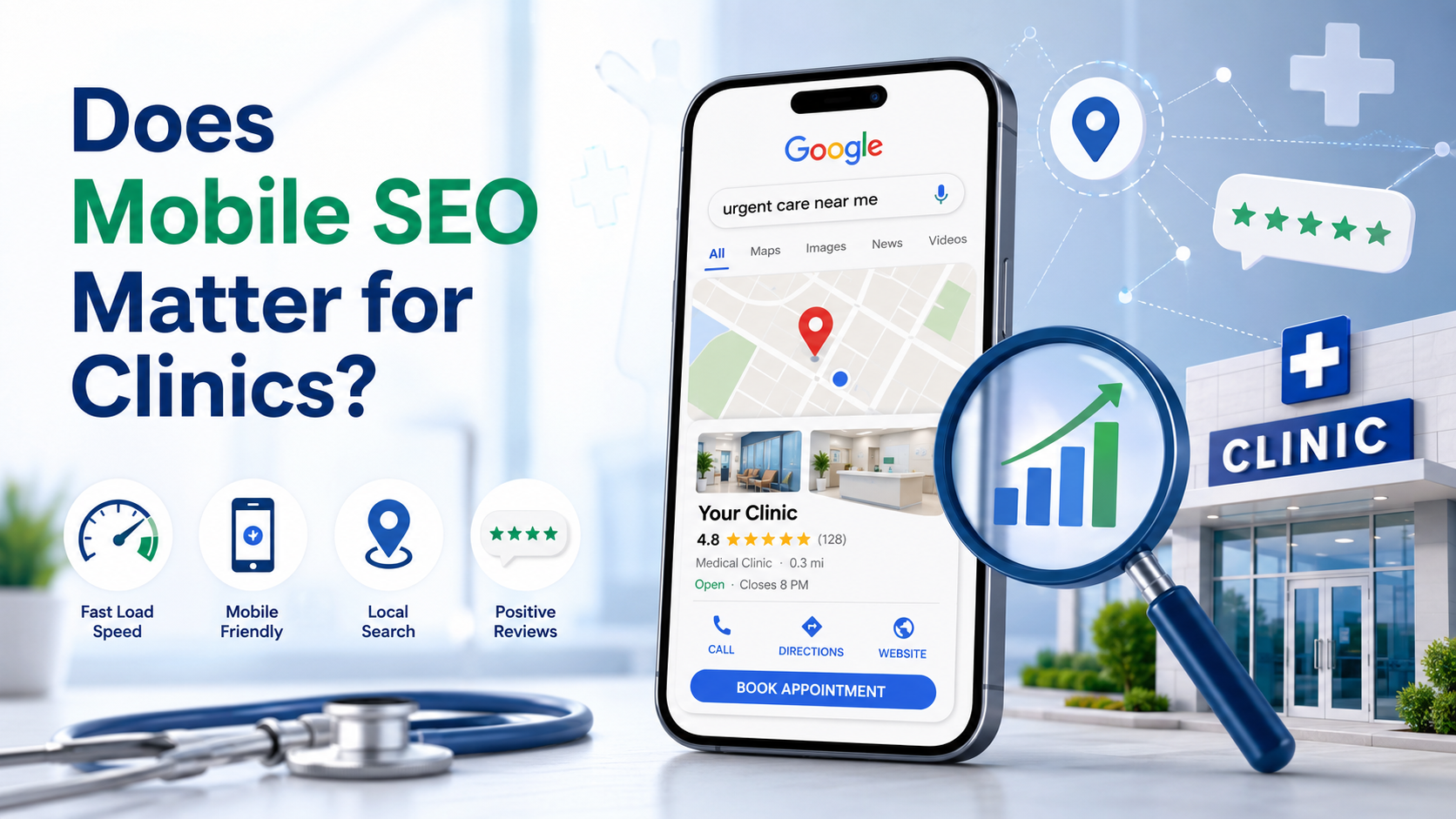
Imagine you are a patient. It’s 8:00 PM, you’re sitting on your couch, and you’ve just developed a nagging pain in your wrist. You don’t walk to your office to boot up a desktop computer. You reach into your pocket, pull out your smartphone, and type “urgent care near me” or “hand specialist.”
If your clinic doesn’t appear in those top few results, or if your website takes an eternity to load on that patient’s screen, you’ve lost them before they even knew your name.
In the modern healthcare landscape, mobile SEO for clinics isn’t just a “nice to have”—it is the literal front door of your practice.
Google transitioned to mobile-first indexing years ago, meaning the search engine predominantly uses the mobile version of your content for indexing and ranking. If your desktop site is a masterpiece but your mobile site is a cluttered mess, your rankings will suffer across the board.
For medical practitioners, the stakes are higher. Patients searching on mobile are often looking for immediate solutions. They want to find your phone number, your address, or an “uncomplicated” booking button. If you aren’t optimizing for these micro-moments, you are handing patients over to the clinic down the street.
To ensure your practice thrives, you need a robust strategy for seo for medical practices that prioritizes the handheld experience. Here is how you can audit and improve your presence:
On mobile, every second counts. If your site takes longer than three seconds to load, bounce rates skyrocket.
You need a website that “flows” into any screen size. Buttons should be “finger-friendly” (large enough to tap without zooming), and text must be legible without horizontal scrolling. When investing in Medical SEO Services, ensure the technical audit prioritizes the user interface (UI) of the mobile version specifically.
Most mobile medical searches have local intent. Your Google Business Profile (GBP) is your most important mobile asset.
Mobile users consume information differently. They scan. To keep them engaged:
When creating content for seo for medical websites, focus on answering common patient questions directly. This not only helps with readability but also positions you for “Featured Snippets” at the top of Google search results.
The ultimate goal of mobile SEO is conversion. A mobile user doesn’t want to copy and paste your phone number. They want a prominent, sticky “Call Now” button. Integrating seamless communication options is a hallmark of effective seo for medical practices. If a patient has to hunt for your contact info, they will move on to a more accessible provider.
The bridge between a patient in pain and the care you provide is a five-inch screen. By prioritizing mobile-optimized speed, local search visibility, and intuitive design, you ensure that your clinic is the one that appears when it matters most.
Ready to transform your digital presence? If you have questions about how to start your journey toward better rankings, feel free to Contact Us today for a consultation.
Mobile SEO focuses on location-based results, page speed, and screen adaptability. Since mobile users are often “on the go,” Google prioritizes local relevance and fast-loading sites to provide the most immediate, accessible answers possible compared to deeper research typically done on desktops.
Site speed is a direct ranking factor for Google. If your mobile site is slow, users will leave (bounce). High bounce rates signal to Google that your site isn’t valuable, causing your clinic to drop in search results, making it harder for new patients to find you.
Mobile-first indexing means Google primarily uses the mobile version of a website for ranking and indexing. Even if your desktop site is perfect, Google determines your search position based on how well your site performs and looks on a smartphone.
While you can manage basic updates like Google Business Profile posts, professional Medical SEO Services handle complex technical tasks. This includes schema markup, backlink building, and technical speed optimizations that are difficult to execute without specialized knowledge, ensuring a higher return on investment.
You should perform a technical audit at least quarterly. Mobile technology and Google’s algorithms change rapidly. Regular checks ensure your links work, your load speeds remain fast, and your content continues to rank well for seo for medical clinics.