

Why Should Medical Websites Optimize for Patient Decision Paths?
Sep 30, 2026


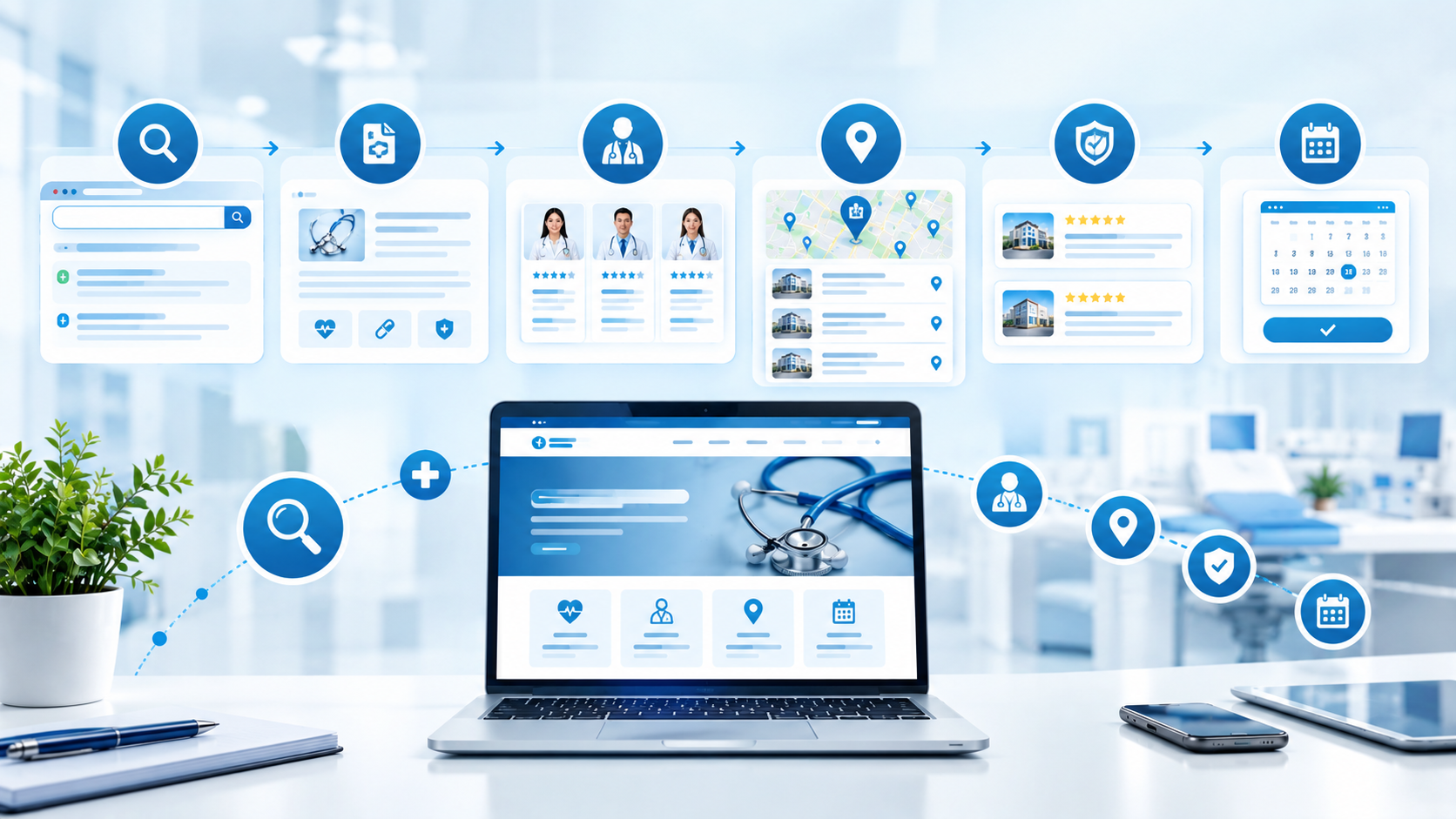
Healthcare search visibility is no longer about ranking a website for a handful of medical keywords. Patients use search engines to research symptoms, compare treatments, evaluate physicians, find nearby clinics, read reviews, and decide whether a healthcare provider is right for them.
For medical practices, this creates a bigger opportunity—and a bigger responsibility.
A healthcare website needs to demonstrate relevance, expertise, trust, and local credibility across multiple types of searches. Simply publishing more blog posts or adding keywords to existing pages is unlikely to create lasting authority.
This is where The Medical SEO can help healthcare practices develop a more strategic search presence.
Through specialized Medical SEO Services, practices can connect their services, physicians, treatment information, educational resources, locations, and reputation into a stronger digital ecosystem. The goal is not simply to attract more visitors but to help the right patients discover reliable information and take meaningful next steps.
Healthcare search authority describes how strongly a website is recognized as a relevant and credible source for specific medical subjects, services, treatments, and locations.
For example, imagine an orthopedic clinic that wants to become more visible for knee-related searches.
Its website may contain pages about:
When these pages are properly organized and connected, the website can demonstrate broader knowledge around orthopedic care rather than relying on one isolated service page.
Search authority develops when these different signals consistently reinforce the same areas of expertise.
One of the strongest ways to establish search authority is to create comprehensive topic coverage around the services a practice actually provides.
Instead of creating a single page targeting a broad term such as “medical clinic,” build content around specific services, conditions, treatments, and patient questions.
For example, a dermatology practice could develop content covering:
Each page should serve a different purpose and provide genuinely useful information.
The supporting content can then connect back to important service pages through relevant internal links.
This creates a logical content structure that helps users navigate the website while giving search engines more context about the practice’s expertise.
For practices looking to strengthen their overall visibility, Medical SEO Services can provide a strategic foundation for developing this type of healthcare-focused search structure.
Modern search is increasingly focused on understanding relationships between entities and topics.
For a healthcare website, these relationships can be particularly important.
Consider this structure:
Physician → Specialty → Treatment → Condition → Location
For example:
Dr. Smith → Cardiology → Preventive Cardiac Care → Heart Disease → Denver
When these relationships are clearly represented across physician profiles, service pages, educational content, location information, and structured data, the website becomes easier to interpret.
Patients also benefit because they can move naturally from researching a condition to discovering a relevant treatment, physician, or clinic.
This creates a better user journey while strengthening the website’s overall topical structure.
Medical websites need to make professional expertise easy to understand.
A strong physician profile can include:
These details help patients understand who is behind the healthcare information they are reading.
They can also strengthen the relationship between the physician, specialty, treatment, and content published across the website.
For medical articles, consider including an appropriate author or medical reviewer when relevant. Clearly identifying professional involvement can make content more transparent and useful.
The objective is not to add credentials simply for SEO. It is to demonstrate real expertise in a way that helps patients make informed decisions.
Patients do not all search for healthcare information in the same way.
Someone experiencing a new symptom may want educational information, while another person may already be looking for a nearby physician.
A strong healthcare content strategy should address different stages of the search journey.
Patients may ask:
They may also search:
Patients closer to making a decision may search:
Finally, they may look for:
Creating content for these different intents gives a medical website more opportunities to provide value throughout the patient’s search journey.
For most medical practices, national visibility is not the only objective.
A clinic usually needs to reach patients within a specific geographic market.
Local search optimization can help establish connections between the healthcare provider and the community it serves.
Important areas include:
However, local SEO should not mean creating dozens of pages with only the city name changed.
Each location page should provide meaningful information about the practice, services, physicians, accessibility, and patients it serves.
Useful local content creates genuine value instead of simply repeating geographic keywords.
Internal linking is another important part of healthcare search authority.
A medical website may have dozens or even hundreds of pages. Without a logical internal linking structure, valuable content can become isolated.
Consider an article about knee pain.
Relevant links could connect the reader to:
Use descriptive anchor text that tells users what they will find after following the link.
For example, orthopedic treatment services is more useful than a generic phrase such as “learn more.”
Strong internal linking helps users discover related information while creating clearer relationships between important pages.
High-quality content needs a strong technical foundation.
A healthcare website should be regularly reviewed for:
Technical SEO may not always be visible to patients, but it affects how efficiently search engines can access and understand the website.
It also affects the user experience.
Patients should be able to quickly locate essential information such as the practice’s phone number, services, physicians, location, and appointment options.
Structured data can help provide additional context about important information on healthcare websites.
Depending on the page, relevant structured data may describe:
The information represented through structured data should accurately reflect what is visible on the page.
Structured data should not be treated as a shortcut to rankings. Its value comes from helping search systems better understand the entities and information already presented on the website.
When combined with quality content and clear site architecture, it can contribute to a more understandable digital presence.
Search authority is not only about rankings.
Patients also consider what others say about a healthcare practice.
Reviews, professional credentials, patient experiences, reputable mentions, and accurate business information can all influence how a practice is perceived online.
Healthcare organizations should therefore approach reputation as part of their broader search strategy.
Encourage genuine patient feedback where appropriate, maintain accurate profiles, respond professionally to reviews, and make important professional credentials easy to find.
The goal should always be to represent the practice accurately rather than manufacture credibility.
Search behavior continues to change.
Patients increasingly use conversational queries and detailed questions when researching healthcare topics. This means medical websites need content that provides direct, useful, and well-organized answers.
Strong healthcare content should:
The broader shift toward semantic and entity-based search also makes relationships between healthcare topics increasingly important.
Practices can explore how these changes are influencing search strategy through Medical SEO in AI Search.
Building healthcare search authority requires more than one optimization tactic.
The Medical SEO can bring several elements together into a unified strategy:
Ensure that search engines can efficiently crawl, interpret, and index the website.
Create comprehensive pages around the services patients are actually searching for.
Develop useful resources that answer related questions, conditions, and treatment concerns.
Connect the practice with its target geographic market.
Clearly establish relationships between physicians, specialties, services, treatments, conditions, and locations.
Create logical pathways between related pages and distribute contextual relevance throughout the website.
Clearly communicate professional credentials, experience, and medical expertise.
Monitor meaningful indicators such as organic visibility, qualified traffic, inquiries, appointment-related actions, and engagement.
When these components work together, a healthcare website can develop a more consistent and recognizable search presence.
Healthcare SEO has unique considerations that generic SEO strategies may overlook.
Medical websites need to balance search visibility with accuracy, expertise, patient experience, local relevance, technical performance, and reputation.
Specialized Medical SEO Services can help healthcare practices approach these areas as parts of one connected strategy.
The objective should not simply be to generate more traffic.
The real objective is to help the right patients find useful information, understand the practice’s expertise, discover relevant services, and take the next appropriate step.
Your practice already has valuable medical expertise. The challenge is making that expertise easier for patients to discover and understand online.
The Medical SEO helps healthcare practices develop stronger search visibility through strategic content, technical optimization, local search strategies, topical authority, and patient-focused SEO.
Ready to strengthen your healthcare search presence?
Strengthen Your Healthcare SEO
Healthcare search authority refers to how strongly a medical website demonstrates relevance, expertise, credibility, and trust around specific healthcare topics, services, treatments, physicians, and locations.
Medical SEO Services can strengthen authority through technical SEO, useful content, topical coverage, local optimization, internal linking, physician expertise signals, structured data, and reputation-focused strategies.
Topical authority helps demonstrate depth around specific healthcare subjects. Connecting service pages with relevant conditions, treatments, questions, and educational resources creates a stronger and more useful website structure.
Yes. Local SEO helps search engines understand where a healthcare practice operates and which communities it serves. Accurate business information, reviews, location content, and relevant local signals can support local visibility.
Yes. Detailed physician profiles can communicate professional credentials, specialties, experience, and areas of expertise while helping connect healthcare providers with relevant services and topics.
Yes. Relevant internal links help patients discover related information and help search engines understand how services, treatments, conditions, physicians, and educational resources are connected.
The timeline varies depending on competition, website quality, existing authority, content depth, technical condition, location, and the consistency of SEO efforts. Building meaningful authority is generally a long-term process.