

How Can Clinics Dominate Local SEO in 2026?
Apr 16, 2026


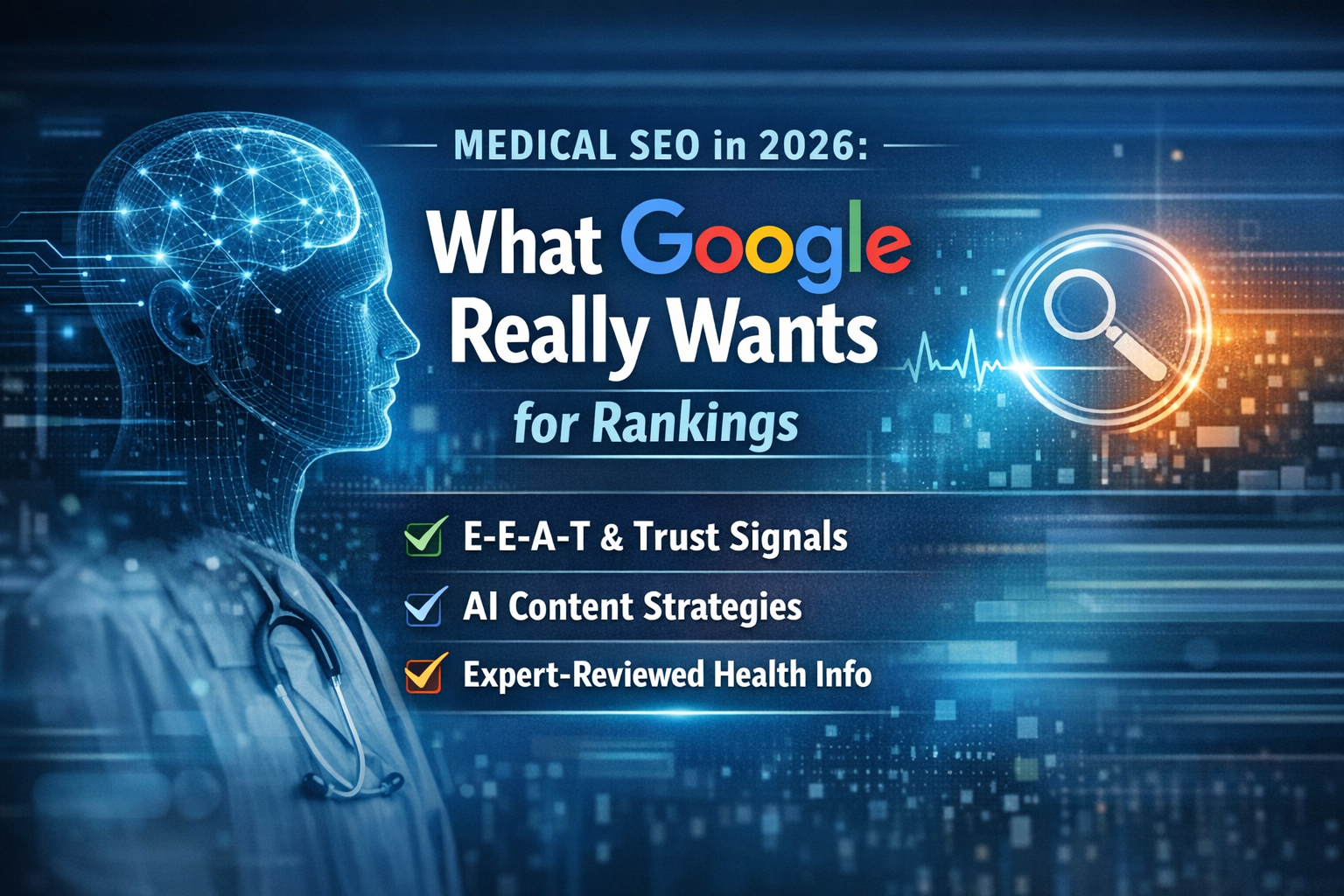
Build Trust, Authority, and Visibility in the AI-Powered Search Era
Medical SEO in 2026 is no longer about simply ranking on search engines—it’s about earning trust and delivering accurate, expert-backed information. As Google evolves into an AI-driven answer engine, healthcare websites must meet stricter standards than ever before. This guide explains what Google expects today and how you can align your strategy to stay competitive, visible, and credible.
The landscape of medical SEO has changed dramatically over the past few years. In 2026, Google is no longer just indexing and ranking pages—it is actively evaluating the reliability of health-related content. With the rise of AI-generated summaries and zero-click searches, users often receive answers directly on the search page, reducing the need to visit websites.
This shift has raised the bar for healthcare content. Websites must now focus on delivering accurate, up-to-date, and user-friendly information. It’s no longer enough to optimize for keywords; you must also demonstrate expertise, authority, and trust. Understanding these expectations is essential for building a successful medical SEO strategy.
Google treats healthcare content differently because it directly impacts people’s well-being. In 2026, its top priority is ensuring that users receive safe, accurate, and reliable medical information. Any misleading or outdated content can negatively affect rankings, regardless of how well it is optimized.
Websites must adopt a responsible approach to content creation. This includes fact-checking information, updating content regularly, and avoiding exaggerated claims. Google’s algorithms are designed to detect low-quality or potentially harmful information, making accuracy the foundation of medical SEO success.
Healthcare content falls under “Your Money or Your Life” (YMYL), meaning it can influence a user’s health or safety. Because of this, Google applies stricter evaluation criteria. Content must be created or reviewed by qualified professionals and supported by credible sources. This ensures users can trust the information they find and make informed decisions about their health.
E-E-A-T—Experience, Expertise, Authoritativeness, and Trustworthiness—is the most important ranking factor for medical websites in 2026. Google uses these signals to determine whether your content is credible and valuable.
Healthcare websites must clearly demonstrate expertise and transparency. This includes showing who created the content, their qualifications, and the sources used. Without strong E-E-A-T signals, even well-written content may struggle to rank.
To build trust, include detailed author bios with medical credentials and experience. Content should be reviewed by licensed professionals whenever possible. Adding references from trusted medical sources strengthens authority. These elements not only improve rankings but also build confidence among users.
AI has revolutionized content creation, but in healthcare, accuracy is critical. Google allows AI-generated content, but only if it meets high standards of quality and reliability. Content created solely by AI without human oversight often lacks depth and credibility.
The best approach is to combine AI with human expertise. This ensures content is efficient to produce while maintaining accuracy and trustworthiness.
A hybrid model uses AI to generate drafts and structure content, while medical experts review and refine it. This process ensures factual accuracy and adds professional insights. Human validation is essential for maintaining credibility, especially in sensitive topics like healthcare.
In 2026, Google favors websites that specialize in specific medical areas rather than covering a wide range of topics. Building topical authority means becoming a trusted source within a niche, such as cardiology, dermatology, or diabetes care.
Focusing on a single niche allows you to create more detailed and valuable content. This improves both user experience and search rankings.
Content clusters involve creating multiple related articles around a central topic. For example, a diabetes cluster might include symptoms, causes, treatments, and lifestyle tips. Interlinking these articles helps search engines understand your expertise and improves navigation for users.
Search behavior in healthcare has become more conversational. Users now ask detailed questions about symptoms and treatments instead of using short keywords. This shift requires content that directly addresses real-life concerns.
Understanding search intent helps you create content that is both relevant and helpful. It also improves engagement and search visibility.
Use simple, conversational language to answer common patient questions. Structure your content with clear headings and include FAQs to improve readability. This approach ensures users quickly find the information they need.
Google’s AI-powered summaries now provide instant answers, leading to an increase in zero-click searches. This means users often get the information they need without visiting a website.
While this reduces traffic, it increases the importance of appearing in search results. Visibility is now just as important as clicks.
Optimize your content for featured snippets by providing clear, concise answers. Use structured formatting and highlight key information. This increases your chances of being featured in AI summaries and improves brand visibility.
Trust signals are critical for medical SEO. Google evaluates multiple factors to determine whether your website is reliable. These include author credentials, website security, transparency, and user feedback.
Strong trust signals improve credibility and help your content rank higher.
Include detailed author profiles, secure HTTPS connections, and clear contact information. Reference credible medical sources and display patient reviews. These elements reassure users and strengthen your website’s authority.
Traditional keyword optimization is no longer enough. Google now understands content through entities such as diseases, symptoms, and treatments. This allows it to interpret context more effectively.
Focusing on entities helps your content align with how Google processes information.
Connect related concepts within your content. For example, link symptoms to diagnoses and treatments. This structured approach improves relevance and helps search engines understand your content more clearly.
Technical SEO remains essential for medical websites. A fast, mobile-friendly website ensures users can access information quickly. Poor performance can lead to higher bounce rates and lower rankings.
Google prioritizes websites that provide a smooth and efficient user experience.
Most healthcare searches happen on mobile devices. Fast loading speeds and responsive design improve usability. A well-optimized website keeps users engaged and signals quality to search engines.
Local SEO is crucial for clinics and healthcare providers. Many users search for nearby medical services, making location-based optimization essential.
A strong local presence can significantly increase patient inquiries and appointments.
Maintain an updated business profile, encourage patient reviews, and use location-specific keywords. Consistent contact details across platforms improve visibility and trust.
Medical information evolves constantly, making regular updates essential. Google favors content that reflects the latest research and guidelines.
Updating existing content is often more effective than creating new articles.
Refreshing old content with new data and insights improves accuracy and relevance. It also signals to Google that your website is active and reliable.
Many healthcare websites still rely on outdated SEO practices. Avoid publishing generic content, ignoring author credibility, and failing to update information.
These mistakes can harm both rankings and user trust.
Focus on quality, accuracy, and user experience. Regularly review your content and adapt to changing search trends. Staying updated ensures long-term success.
Medical SEO in 2026 is centered around trust, accuracy, and user-focused content. Google prioritizes websites that provide reliable information and a positive user experience.
Success requires consistent effort, expert involvement, and a commitment to quality. By aligning with Google’s expectations, healthcare websites can achieve sustainable growth and long-term visibility.
Medical SEO in 2026 focuses on optimizing healthcare websites to provide accurate, trustworthy, and expert-reviewed content. Google prioritizes user safety, meaning websites must follow strict quality guidelines. It is no longer just about keywords but about delivering reliable medical information that users can trust.
Google prioritizes E-E-A-T—Experience, Expertise, Authoritativeness, and Trustworthiness. It evaluates content quality, author credentials, and user experience. Websites that provide accurate, well-researched, and regularly updated information are more likely to rank higher in search results.
Yes, AI-generated content can rank if it meets Google’s quality standards. However, it must be reviewed and validated by medical professionals to ensure accuracy. Purely AI-generated content without expert oversight may harm credibility and rankings.
Local SEO helps clinics and hospitals appear in location-based searches like “doctor near me.” Optimizing business profiles, collecting patient reviews, and using local keywords improves visibility. This helps attract nearby patients who are actively searching for healthcare services.
Medical content should be updated regularly to reflect the latest research and guidelines. Updating content every few months ensures accuracy, improves trust, and helps maintain or improve search rankings over time.